Zero-Click GEO and the Future of Search Marketing
Discover how Zero-Click GEO is shaping the future of search marketing with strategies to boost visibility, authority, and brand trust.

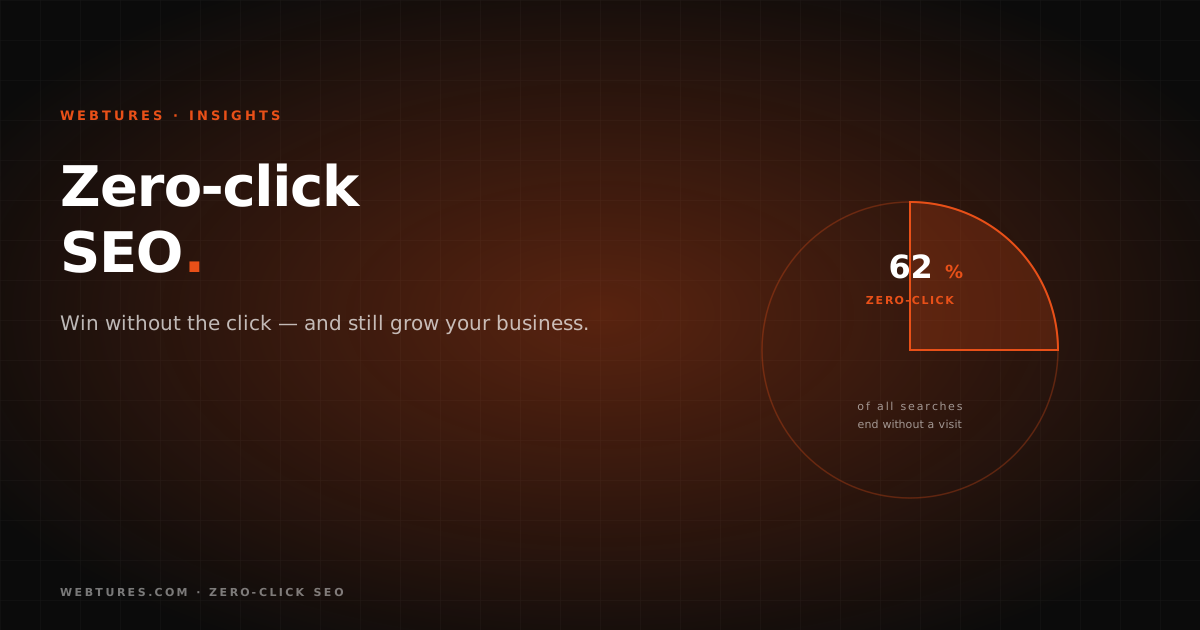
Search behavior is evolving faster than ever. Featured snippets, knowledge panels, People Also Ask results, AI Overviews, AI Mode, voice search, and answer engines now allow users to get information before they visit a website. This shift is often described as zero-click visibility, and it has become an important part of GEO because brands must now compete not only for clicks, but also for answer presence, source trust, and citation readiness.
In a zero-click environment, the goal is not simply to reduce the user journey to a short answer. The real opportunity is to make your brand visible in the moments where users form opinions, compare options, validate information, and decide which sources to trust. For this reason, zero-click visibility should be managed as a GEO strategy that connects content structure, entity clarity, technical accessibility, brand authority, and AI Search measurement.
What Is Zero-Click GEO?
Zero-Click GEO is the practice of preparing content and brand signals so that your information can appear, be summarized, or be cited directly in search result features and AI-powered answer experiences. These experiences may include featured snippets, knowledge panels, People Also Ask boxes, rich results, AI Overviews, AI Mode, ChatGPT Search, Perplexity, Gemini, and other answer engines.
Unlike a click-only strategy, Zero-Click GEO focuses on visibility before the website visit. A user may see your brand, data, answer, product, service, or expert explanation inside an answer surface and use that information to make a decision later. This means that impressions, citations, source mentions, answer coverage, and brand trust become important performance signals alongside sessions and conversions.
Zero-click visibility does not mean clicks are no longer valuable. It means the discovery journey has expanded. Brands need content that can answer questions directly while also giving users a reason to continue deeper when they need comparison, proof, pricing, implementation, or expert support.
Why Zero-Click Visibility Is Increasing
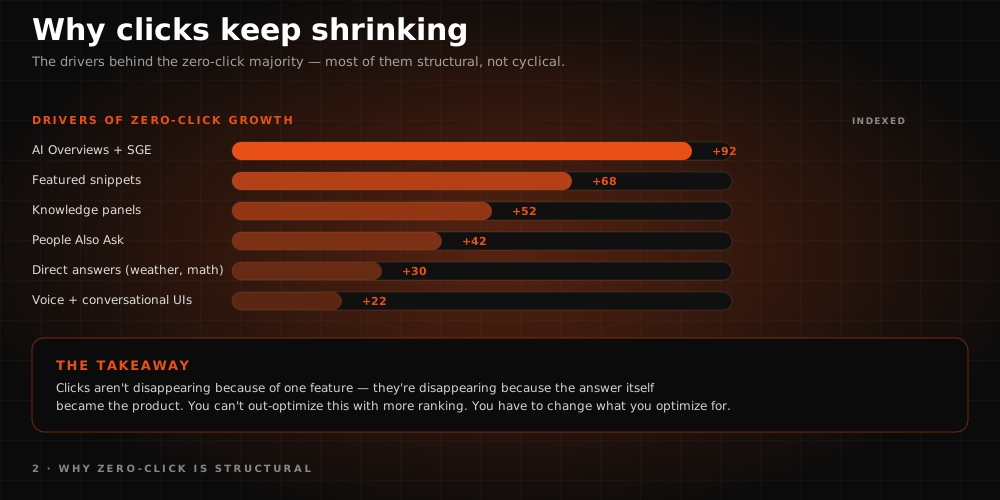
Zero-click experiences are increasing because users expect faster and clearer answers. Google and other discovery platforms now provide direct answers through featured snippets, knowledge panels, related questions, local packs, product panels, and AI-generated summaries. Mobile search, voice assistants, and conversational AI experiences have accelerated this behavior because users often want immediate guidance without opening multiple pages.
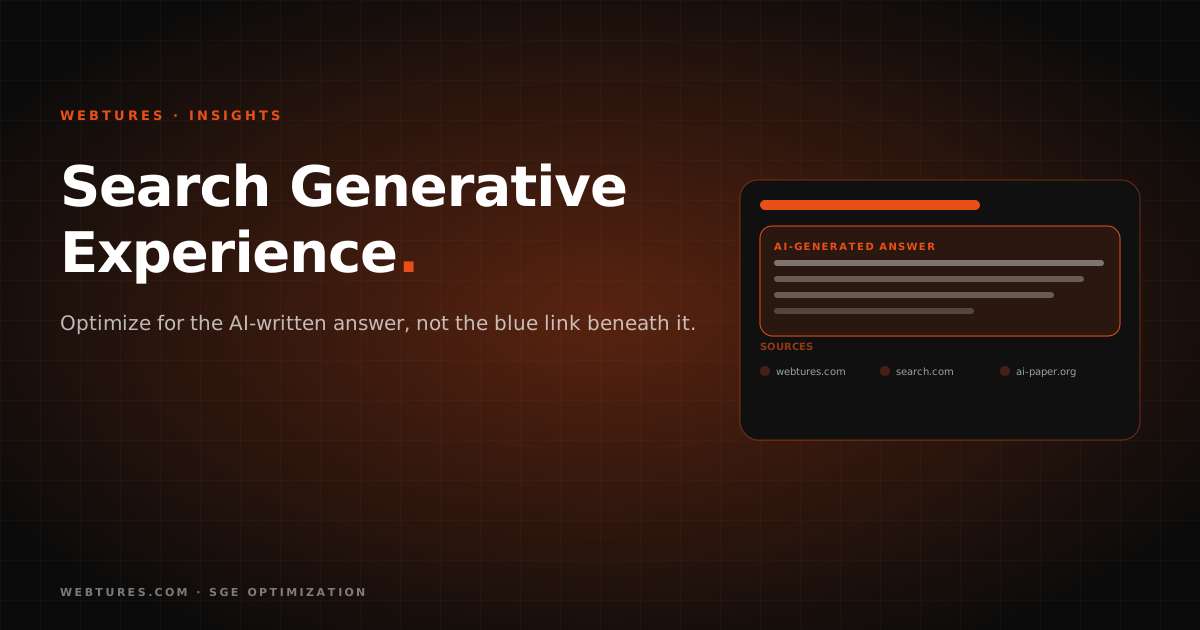
AI-powered search has expanded this trend. AI Overviews and AI Mode can synthesize information from multiple sources, show links for deeper exploration, and support follow-up questions. Instead of matching only a short phrase, these systems can interpret broader prompts, compare entities, summarize options, and guide users through a decision path.
For brands, this means content must be clear enough to answer a question, deep enough to support trust, and structured enough to be evaluated as a source.
How Zero-Click GEO Impacts Businesses
Zero-click visibility creates both risks and opportunities for businesses. The main risk is that traditional traffic metrics may decline or become harder to interpret because some users receive enough information directly in an answer surface. This can make reporting more complex if success is measured only by sessions, page views, or click-through rate.
The opportunity is that brand exposure can increase even before a user visits the site. When your content is visible in a featured snippet, AI Overview, answer engine response, local result, or knowledge panel, your brand can influence the user’s perception earlier in the journey. This can support awareness, trust, branded demand, direct visits, assisted conversions, and sales conversations.
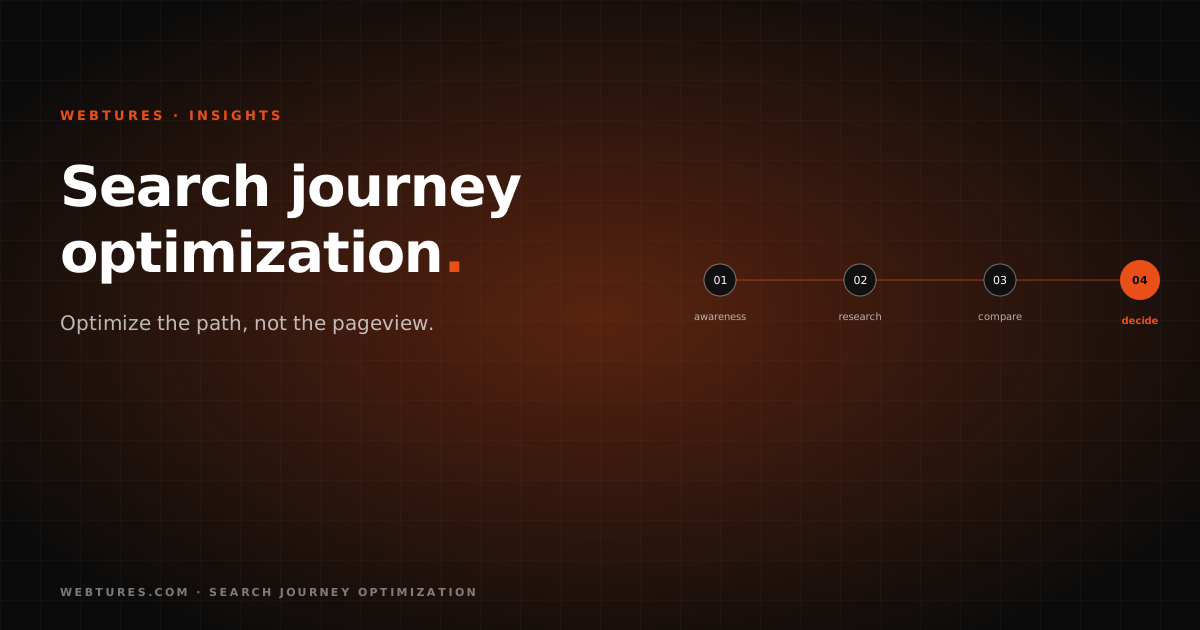
Smart teams now evaluate zero-click performance as part of the full discovery journey. The question is not only “How many users clicked?” but also “Where did the brand appear, what answer was shown, which source was cited, and how did that visibility influence later behavior?”
Key Strategies for Zero-Click GEO
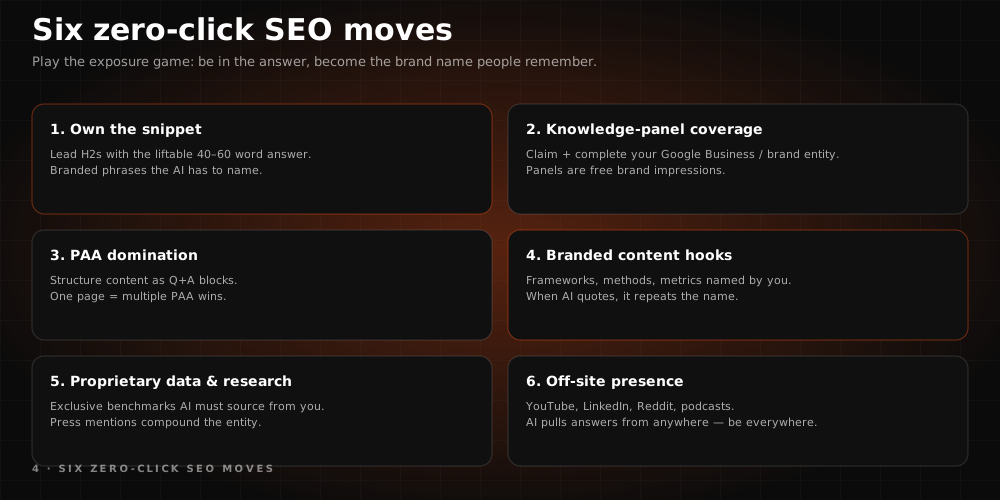
Winning in a zero-click environment requires more than short answers. Brands need content that satisfies user intent quickly, proves expertise, clarifies entities, supports structured understanding, and remains technically accessible for crawlers and AI systems.
Structure Content for Direct Answers
Zero-click visibility often starts with clear answer formatting. Pages should answer the primary question directly, then expand with context, examples, comparisons, and next steps. A strong structure helps both users and answer systems understand the page.
Effective answer structures include:
- A concise answer near the beginning of the section,
- Descriptive headings that match user questions,
- Short paragraphs focused on one idea at a time,
- Lists, tables, definitions, and examples where they improve clarity,
- Internal links to deeper resources for users who need more detail.
This approach supports featured snippets, People Also Ask-style answers, AI summaries, and other source-led visibility opportunities.
Use Structured Data and Schema Markup Correctly
Structured data helps search systems understand the content and context of a page. It does not guarantee visibility in rich results or AI-powered answers, but it can improve eligibility and reduce ambiguity when used correctly.
Depending on the page type, useful schema types may include Organization, Article, Product, FAQ, Breadcrumb, LocalBusiness, Course, Review, Event, or HowTo. The markup should match the visible content on the page and should not be used to describe information that users cannot actually see.
For GEO, structured data should support entity clarity. It should help answer systems understand who the brand is, what the page is about, which product or service is being described, and how the page connects to the broader topic cluster.
Strengthen Brand Authority and Source Trust
Zero-click visibility is not only about providing short answers. It is also about being recognized as a trustworthy source. Brands should consistently publish accurate, original, and helpful content that demonstrates experience, expertise, and transparency.
Strong source trust can be supported by:
- Clear author, expert, and organization information,
- Updated examples, research, case studies, or practical experience,
- Reliable third-party mentions, citations, and digital PR coverage,
- Consistent brand, product, location, and service information across the web,
- Transparent explanations of methods, limitations, and recommendations.
These signals make it easier for users and answer systems to understand why your content deserves attention.
Build Content Around Prompt and Intent Clusters
Zero-click opportunities often appear around specific questions. In AI Search environments, users may ask multi-part prompts that combine research, comparison, and decision-making. A GEO-focused content strategy should therefore group questions into prompt clusters.
Useful prompt clusters may include:
- Definition prompts such as “What is this?”
- Comparison prompts such as “Which option is better?”
- Process prompts such as “How do I do this step by step?”
- Risk prompts such as “What should I avoid?”
- Commercial prompts such as “Which solution fits my business?”
This helps brands cover the full user journey instead of creating isolated answer blocks.
The Role of Content in Zero-Click GEO
Content is central to zero-click visibility. Users expect fast answers, but answer systems also need enough context to evaluate whether a page is useful and trustworthy. For this reason, a strong page should combine concise answers with deeper supporting information.
A practical structure may start with a direct answer, continue with detailed explanation, include examples or comparison criteria, and then guide users toward related resources. This helps the page serve both quick-answer scenarios and deeper decision journeys.
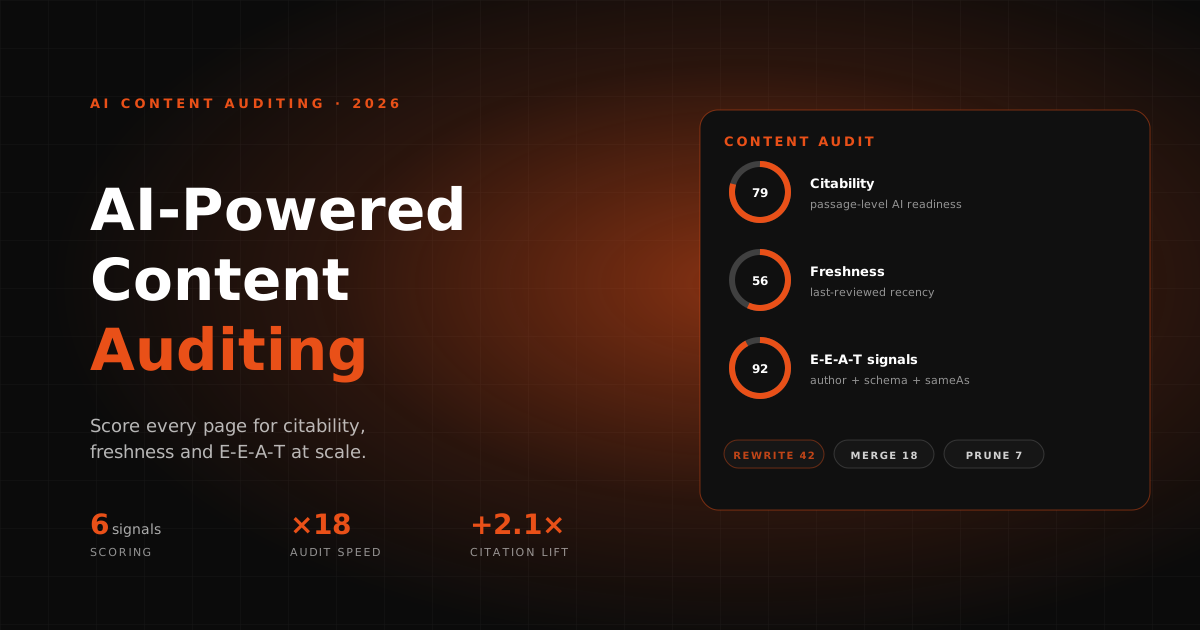
Content freshness also matters. Outdated definitions, old product information, missing context, or unsupported claims can reduce trust. Pages that target zero-click and AI Search visibility should be reviewed regularly for accuracy, completeness, and source quality.
Zero-Click GEO in the AI Search Era
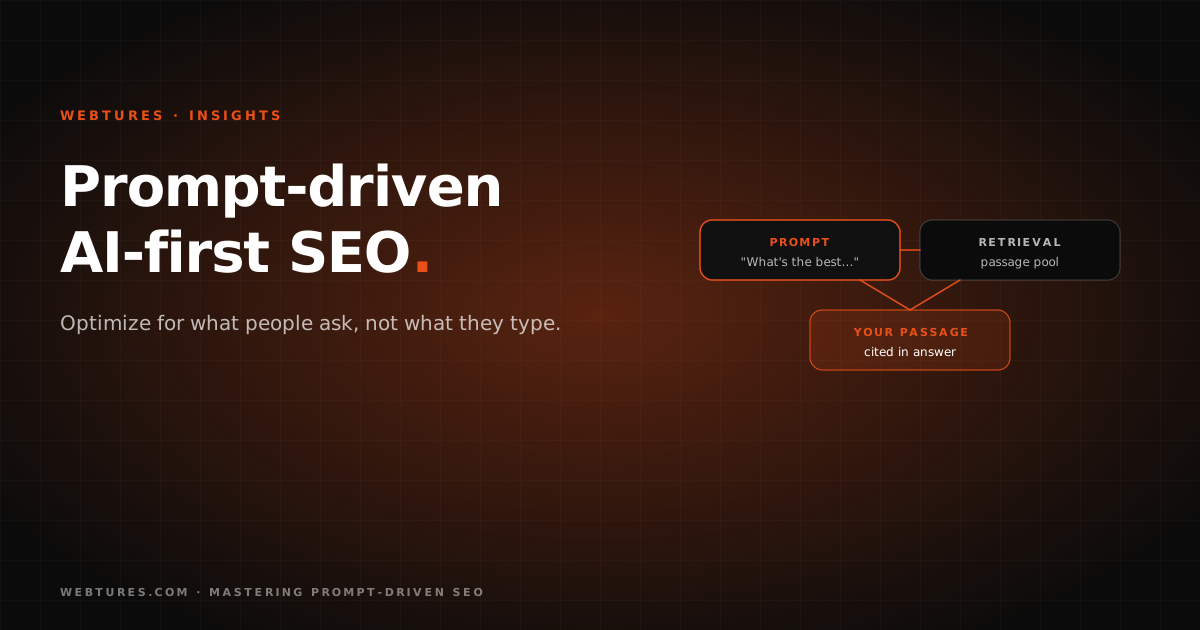
AI-powered search experiences have expanded zero-click behavior. AI Overviews, AI Mode, ChatGPT Search, Perplexity, Gemini, and similar systems can synthesize information, compare options, and guide users through follow-up questions. This creates a new visibility layer where being cited or represented accurately can matter even when the user does not immediately click.
AI systems tend to reward content that is useful, reliable, clear, technically accessible, and supported by strong source signals. This is why Generative AI Consulting can help brands evaluate content architecture, prompt coverage, entity clarity, technical discoverability, and AI Search measurement as one connected system.
In this environment, the value of a click is joined by the value of being seen, cited, and trusted. A brand that appears consistently in answer environments can influence demand even before users arrive on the website.
Measuring Success Beyond Clicks
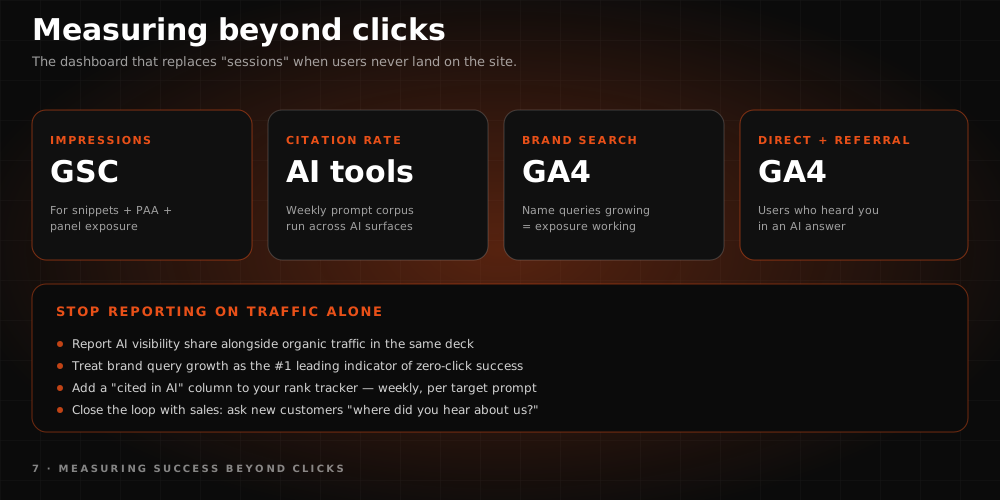
In a zero-click and AI Search landscape, page views and click-through rate do not tell the whole story. Measurement should also include visibility, answer presence, source mentions, brand demand, and assisted behavior.
Useful indicators include:
- Answer Presence: Tracking whether the brand appears in featured snippets, knowledge panels, AI Overviews, AI Mode, or answer engines.
- Source Mentions and Citations: Monitoring whether your URLs, brand, experts, or data points are referenced in answer environments.
- Search Console Data: Reviewing impressions, clicks, queries, pages, and available generative AI performance views where accessible.
- Brand Demand: Watching branded searches, direct visits, returning users, and assisted conversions.
- Engagement Quality: Measuring whether users who do click are more qualified, spend more time, return later, or convert at a higher rate.
- Prompt Coverage: Checking which important user questions are answered well and which still lack strong source-ready content.
This broader measurement model helps businesses understand the real value of zero-click visibility.
Common Mistakes to Avoid
Zero-Click GEO creates strong opportunities, but it can fail when treated as a simple snippet tactic. The most common mistakes include:
- Writing Only for Snippets: Short answers without depth may win attention briefly but fail to build trust.
- Ignoring Prompt Intent: Focusing on isolated terms instead of real questions can produce content that misses the user’s need.
- Using Structured Data Incorrectly: Markup that does not match visible page content can create confusion and reduce trust.
- Neglecting Entity Clarity: Unclear brand, product, author, location, or service information makes the page harder to understand.
- Measuring Only Clicks: Traffic alone does not show answer presence, source mentions, branded demand, or influence on later decisions.
- Letting Content Become Outdated: Old answers, unsupported claims, and stale examples can weaken source eligibility.
- Ignoring Technical Discoverability: Pages blocked by robots.txt, hidden behind heavy scripts, missing from sitemaps, or poorly linked may not be evaluated properly.
Future of Zero-Click GEO
As AI-powered discovery continues to evolve, zero-click visibility will become a bigger part of how users access information and evaluate brands. The future will be shaped by faster answers, follow-up questions, multimodal results, local context, product data, expert sources, and stronger measurement models.
Brands that adapt early will not treat zero-click experiences as lost traffic only. They will treat them as a visibility layer where trust, source quality, entity consistency, and answer readiness influence the entire customer journey.
Zero-Click GEO helps businesses prepare for this shift by building content that is useful for people, understandable for AI systems, and strong enough to be considered as a reliable source.
Would you like to work with us ?
Share your goals, we'll come back with a custom growth plan within one business day. A strategy lead will reach out personally.
Get in touch