Why Search Journey Optimization Matters More Than Ever
Discover why Search Journey Optimization matters in the AI era and how SJO strategies guide users seamlessly from intent to conversion.

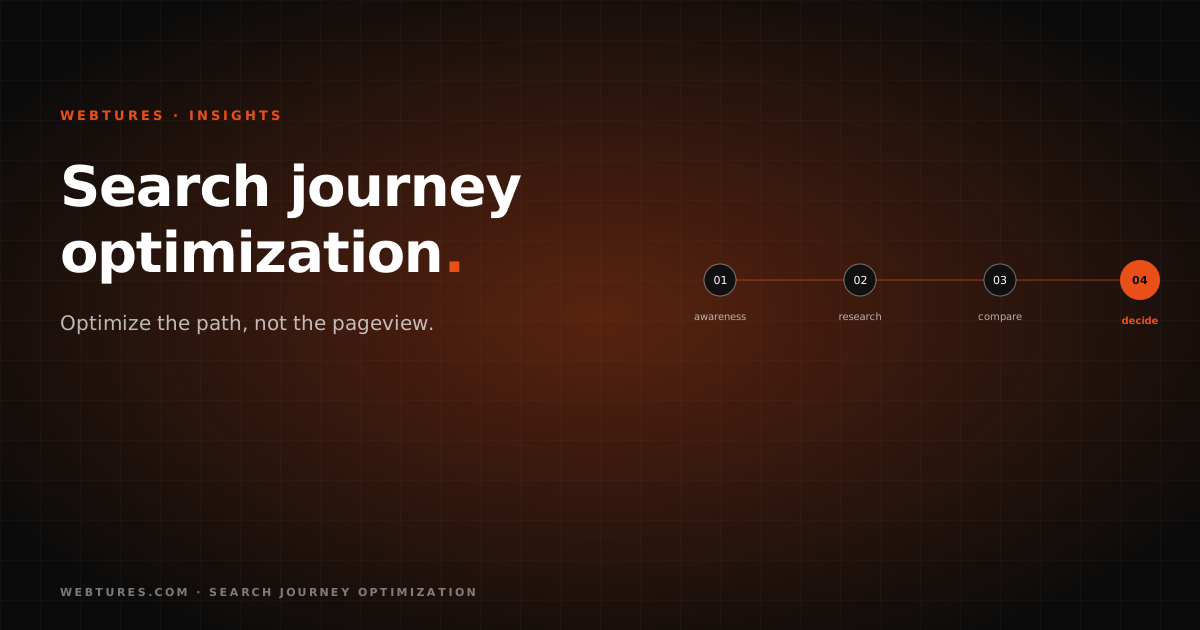
In today’s AI-driven discovery landscape, search is no longer a single query followed by a list of links. Users move through a connected journey: they ask broad questions, compare options, refine prompts, check proof points, explore different formats, and expect clear answers before making a decision. Search Journey Optimization (SJO) helps brands design content and touchpoints for this full journey, with GEO at the center.
If this content were written today with a GEO-first perspective, the core focus would not be isolated page visibility. It would be source eligibility, answer readiness, entity clarity, citation potential, and consistent brand presence across AI Overviews, AI Mode, ChatGPT, Gemini, Perplexity, visual search, voice interfaces, and other generative discovery environments.
What Is Search Journey Optimization (SJO)?
Search Journey Optimization is the process of mapping, designing, and improving the full path users follow from their first question to their final decision. In a GEO context, SJO ensures that each stage of this journey is supported by clear, trustworthy, machine-readable, and citation-ready content.
Instead of treating every page as a separate asset, SJO connects user questions, prompt variations, content formats, entity signals, internal links, structured data, and conversion touchpoints into one journey-based framework. The goal is to help users move forward with confidence while making it easier for AI systems to understand where the brand fits in the broader topic.
A GEO-focused SJO strategy answers three strategic questions:
- Which questions does the user ask at each stage of the journey?
- Which content assets can become trusted sources for those questions?
- Which signals help AI systems connect the brand, topic, product, service, and proof points correctly?
Why Search Journey Optimization Matters in the AI Era

AI-driven search systems interpret more than a single query. They evaluate context, intent, entity relationships, source confidence, content structure, and the user’s likely next question. This changes how brands should think about visibility. Being present for one query is not enough; the brand must remain useful and credible across the full decision path.
Search Journey Optimization fits this shift because it connects content planning with how generative systems retrieve, summarize, compare, and recommend information. A strong SJO model helps a brand become discoverable at the awareness stage, useful at the comparison stage, credible at the validation stage, and persuasive at the action stage.
Brands may also benefit from Generative AI consulting to understand how AI systems interpret user journeys, how prompt patterns change by market, and how content should be structured for inclusion in AI-driven answer experiences.
Key Components of GEO-Focused SJO
A GEO-focused Search Journey Optimization framework is built on five core components: prompt intent mapping, journey-stage content architecture, citation-ready content, entity consistency, and multi-channel discovery alignment. Each component helps users and AI systems understand the brand’s role across the journey.
Prompt Intent Mapping
In GEO, user intent should be mapped through prompts, not only short search phrases. People ask AI systems broad, conversational, and task-based questions. They may ask for definitions, comparisons, recommendations, risks, examples, pricing factors, alternatives, or implementation steps.
Prompt intent mapping helps brands understand:
- What users ask at the awareness, consideration, validation, and action stages.
- Which follow-up questions typically appear after the first answer.
- Which prompts require definitions, lists, comparisons, expert input, or proof.
- Which content gaps prevent the brand from being selected as a useful source.
This approach moves the strategy from phrase matching to answer coverage. The stronger the prompt coverage, the easier it becomes for AI systems to understand when the brand’s content is relevant.
Mapping the Full Search Journey
Search journeys are rarely linear. A single decision can involve AI chats, classic search results, social proof, review platforms, videos, comparison articles, product pages, and direct brand searches. Mapping the full journey means identifying every point where users seek clarity, confidence, and validation.
A practical journey map should include:
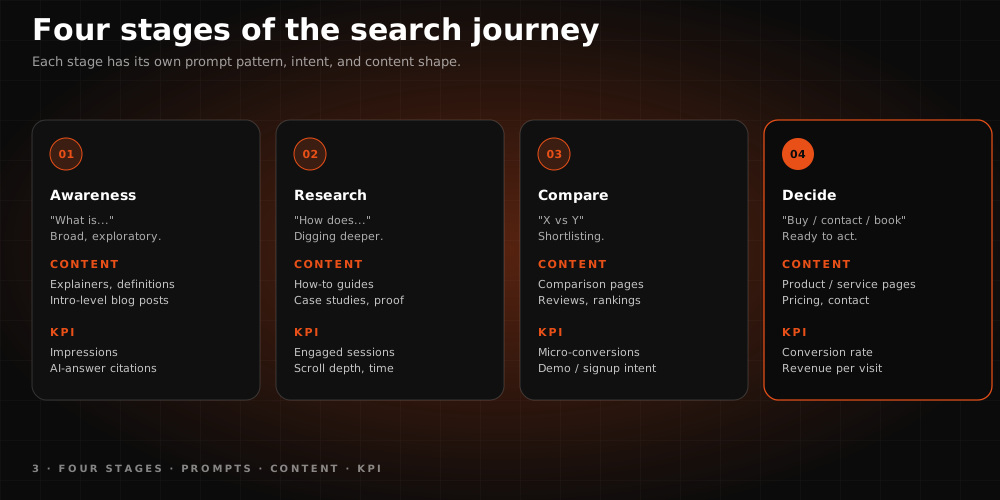
- Awareness questions that help users define the problem.
- Consideration questions that help users compare options.
- Validation questions that help users check trust, proof, and expertise.
- Action-stage content that helps users contact, buy, request a quote, or start a conversation.
By connecting these stages, SJO turns fragmented searches into a structured discovery path that supports both users and AI answer systems.
Citation-Ready Content Architecture
GEO-focused SJO requires content that can be understood, extracted, and referenced. AI systems need clear information blocks, not vague paragraphs. A page should include direct definitions, concise explanations, comparison sections, evidence, examples, and clear next steps.
Citation-ready content usually includes:
- Short answer blocks for core questions.
- Definitions that explain the topic without ambiguity.
- Comparison tables or structured lists when users evaluate options.
- Expert commentary, data, examples, or methodology notes.
- Clear references to brand expertise, service scope, and proof points.
The purpose is not to write for machines instead of people. The purpose is to make useful human-first information structured enough for answer systems to trust and reuse.
Entity Consistency Across the Journey
Entity clarity is one of the most important parts of GEO-focused journey planning. AI systems need to understand who the brand is, what it offers, which topics it is associated with, and why it should be trusted.
Entity consistency should be reviewed across:
- Service pages, product pages, blog content, case studies, and landing pages.
- Author profiles, organization schema, social profiles, and third-party mentions.
- Category naming, internal links, anchor text, headings, and structured data.
- Review platforms, digital PR content, directory profiles, and partner references.
When entity signals are consistent, AI systems can connect the brand with the right topics and user needs more confidently.
Multichannel and Multimodal Discovery
Today’s users do not stay in one environment. They move between AI chat interfaces, search engines, social media, YouTube, podcasts, visual search, voice assistants, newsletters, review sites, and direct website visits. SJO should make the brand’s message consistent across these touchpoints.
Multimodal discovery also means content should not rely only on long-form text. Depending on the topic, users may need diagrams, videos, product visuals, comparison charts, audio summaries, FAQs, or interactive tools. The journey should be designed around the format that best answers the question.
The Role of AI and Generative Search in SJO
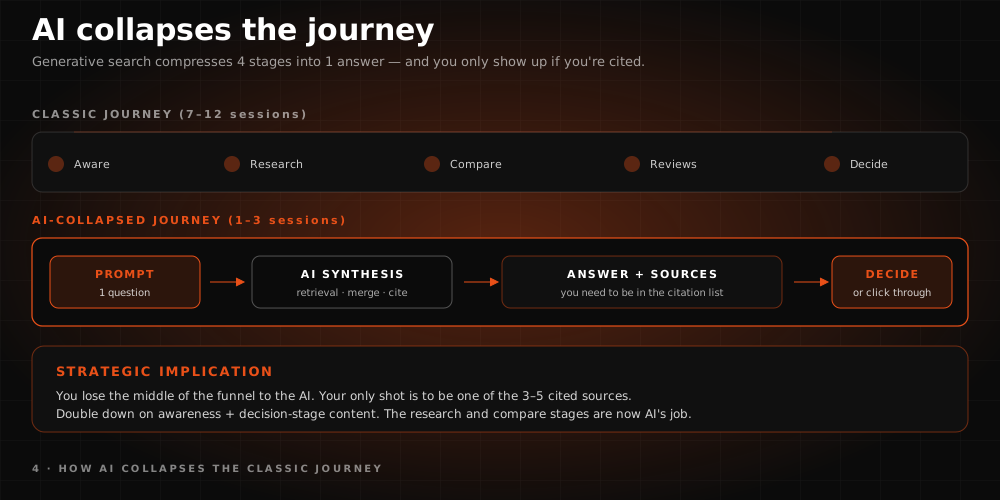

Artificial intelligence has changed how users interact with information. Instead of only scanning links, users can now receive synthesized answers, ask follow-up questions, compare options, and request recommendations. This makes the search journey more conversational, more dynamic, and more dependent on source trust.
SJO aligns with this change by designing content for context, continuity, and answer inclusion. A strong page should clarify the topic, connect related entities, answer likely follow-up prompts, provide evidence, and guide the user toward the next logical step. In generative environments, the most useful content is not only visible; it is understandable, citable, and connected to a broader knowledge structure.
Strategies to Implement Search Journey Optimization
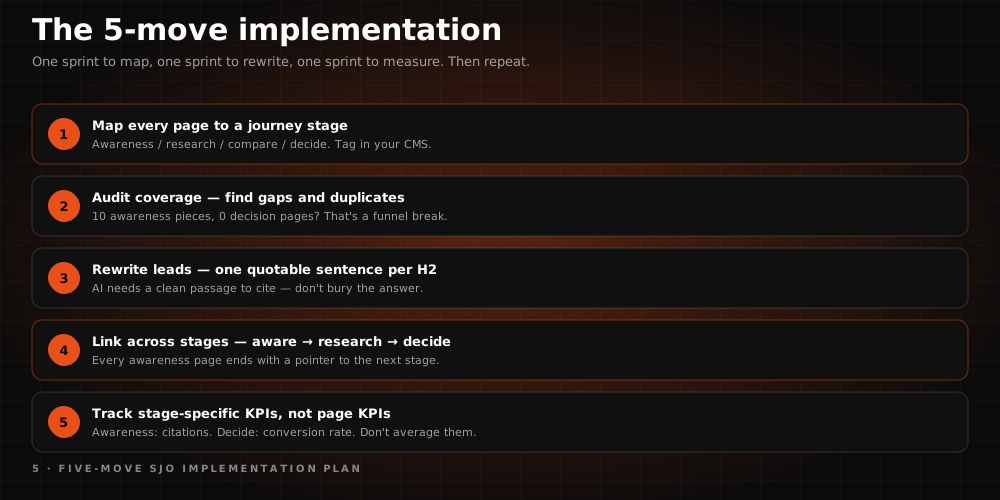
Implementing SJO starts with mapping the user’s full discovery path. The goal is to understand which questions appear at each stage, which platforms influence the user, which content types remove friction, and which proof points build trust. From there, brands can build a GEO-focused journey that supports users and AI systems at the same time.
Create Journey-Focused Content
Journey-focused content matches the user’s intent at every stage. Awareness-stage content may include educational explainers and direct-answer sections. Consideration-stage content may include comparisons, pros and cons, alternatives, case studies, and FAQs. Decision-stage content should include service details, testimonials, pricing factors, demos, contact options, and trust signals.
This structure helps users progress naturally and gives AI systems clearer signals about which page answers which type of prompt.
Build Prompt Clusters Instead of Isolated Topics
Prompt clusters organize related questions around a topic. For example, a user may start with “What is GEO?”, then ask “How does GEO help brands appear in AI answers?”, then compare “GEO agency vs in-house GEO strategy”, and finally ask “Which GEO partner should we choose?” Each prompt belongs to the same journey, but each needs a different content response.
Building prompt clusters helps brands create connected content hubs that answer real user paths instead of isolated questions.
Strengthen Data, Proof, and Trust Signals
GEO-focused journeys depend on trust. Users and AI systems both need evidence before relying on a brand. Content should include real examples, case studies, expert input, methodology notes, original research, customer proof, review signals, and third-party references where relevant.
These signals help the brand move from being simply present to being considered a credible source.
Use Structured Data and Internal Linking Strategically
Structured data helps clarify page type, organization details, article context, FAQs, product information, breadcrumbs, and other entity relationships. Internal linking helps connect related pages into a coherent knowledge structure. Together, these elements support technical discoverability and topic clarity.
The goal is to make the brand’s content easier to crawl, interpret, connect, and retrieve across the full journey.
Continuously Optimize Across the Funnel
Search journeys are never static. User expectations, AI answer formats, competitor content, and discovery platforms change continuously. Brands should regularly review content freshness, prompt coverage, AI answer presence, user engagement, branded demand, and conversion paths.
Continuous optimization keeps the journey relevant and helps the brand maintain visibility across evolving AI-powered discovery environments.
Common Challenges in SJO and How to Overcome Them
Adopting Search Journey Optimization can create stronger discovery and conversion paths, but many organizations face operational and strategic challenges.
1. Fragmented Content Strategies
Many businesses still create content in silos, focusing on isolated pages instead of connected journeys. This leaves gaps where users may drop off, lose trust, or turn to competitors.
Solution: Build a content journey map that connects awareness, consideration, validation, and action-stage assets through internal links, structured summaries, answer blocks, and clear entity signals.
2. Misunderstanding Prompt Intent
Brands often analyze what users type, but not what users actually need next. In AI-driven discovery, follow-up prompts and decision-stage questions matter as much as the first query.
Solution: Use prompt research, customer journey mapping, behavioral data, AI answer reviews, support questions, and sales objections to uncover the “why” behind each discovery path.
3. Difficulty in Measuring Success
Clicks and traffic alone do not fully explain journey effectiveness. AI-driven discovery may influence awareness, consideration, and trust before the user reaches the website.
Solution: Track journey-based indicators such as assisted conversions, branded search growth, return visits, referral mentions, AI answer presence, citation signals, engagement quality, and conversion path depth.
4. Cross-Channel Inconsistency
Users interact with brands across AI chat interfaces, search engines, social platforms, emails, video platforms, review sites, and voice assistants. If messaging, entity information, and value propositions differ across channels, the journey feels fragmented.
Solution: Develop a unified messaging and entity framework so tone, value proposition, proof points, service definitions, and brand descriptions remain consistent across all touchpoints.
5. Resource and Process Limitations
SJO requires ongoing coordination between content, GEO, analytics, product, design, development, and brand teams. Many organizations lack the workflow needed to sustain this work.
Solution: Create recurring cross-functional review cycles, assign ownership for each journey stage, and establish a feedback loop between content performance, AI visibility checks, user behavior, and conversion data.
By addressing these challenges, businesses can transform scattered content into a cohesive SJO strategy. The result is a journey where users find clearer answers, AI systems understand the brand’s relevance, and every touchpoint supports discovery, trust, citation potential, and conversion.
Would you like to work with us ?
Share your goals, we'll come back with a custom growth plan within one business day. A strategy lead will reach out personally.
Get in touch