Mastering Prompt-Driven AI First GEO for AI-Powered Search Engines
Discover how Prompt-Driven GEO adapts content for AI search, boosting visibility, relevance, and user engagement in the AI-driven era.

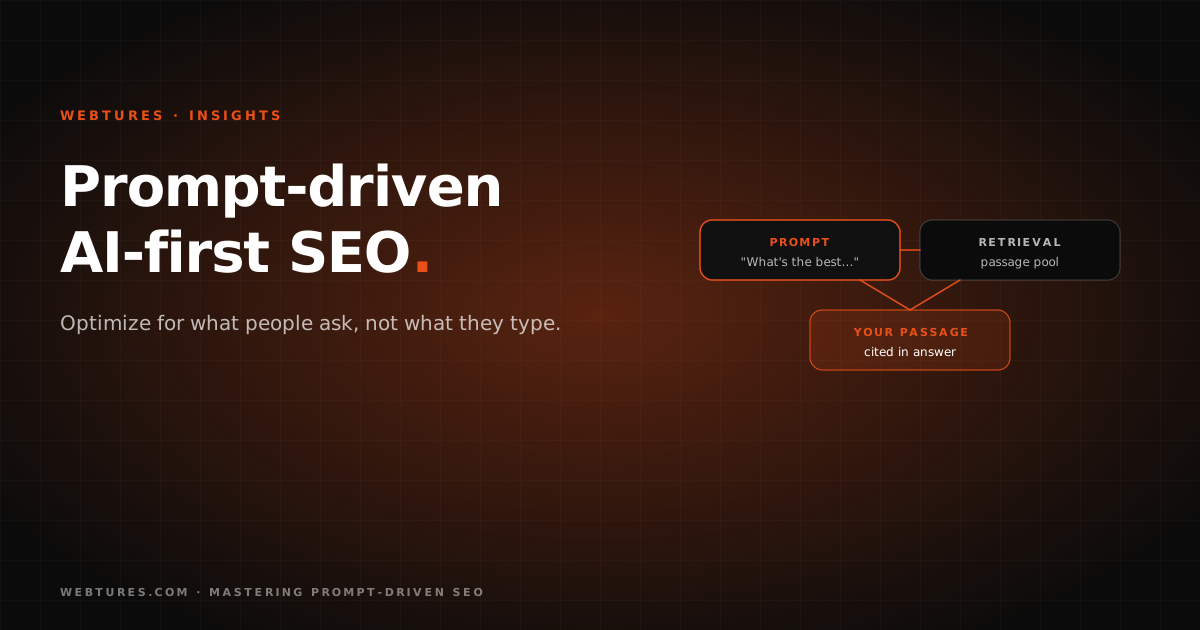
As AI-powered search experiences become more common, the way content is discovered, interpreted, summarized, and cited is changing. Users no longer rely only on short queries; they ask detailed, conversational, and decision-oriented prompts. This shift makes Prompt-Driven GEO an important approach for brands that want to appear as useful and trustworthy sources in AI Search experiences.
Prompt-Driven GEO is not only about writing better prompts for content production. It is about understanding how users ask questions, how answer engines break those questions into subtopics, and how a website can provide clear, structured, verifiable, and source-worthy information. When applied correctly, this approach helps brands align their content with real user intent, AI-generated answer formats, and source selection logic.
What Is Prompt-Driven GEO?
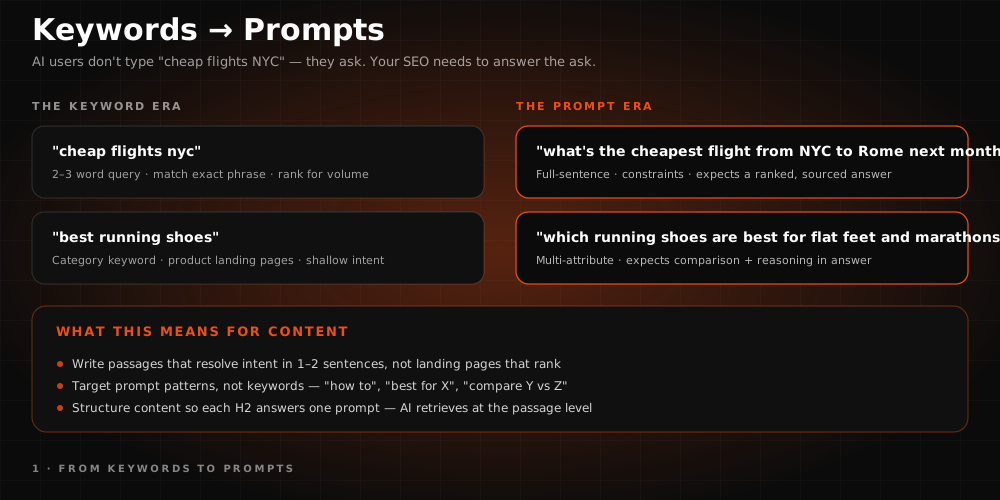
Prompt-Driven GEO is the practice of planning, structuring, and improving content according to the way users ask questions in AI-powered search systems. It focuses on prompts, intent patterns, context, entity relationships, answer formats, and source trust rather than treating visibility as a simple keyword-matching process.
In practice, Prompt-Driven GEO helps brands identify the questions users are likely to ask before making a decision. These questions may be broad, comparative, technical, commercial, local, or highly specific. The goal is to create content that answers these questions directly while also providing enough context, examples, data, and credibility signals for AI systems to understand and evaluate the page.
This approach connects human intent with AI interpretation. It helps content become easier to summarize, cite, and connect with related entities across AI Overviews, AI Mode, ChatGPT Search, Perplexity, Gemini, and similar answer environments.
Why Prompt-Driven GEO Matters in the AI Search Era
AI-powered search experiences have changed how people look for information. Instead of typing short phrases, users now ask multi-layered questions such as “Which option is better for my business?”, “What are the risks?”, “How do I compare these tools?”, or “What should I do first?” These prompts often combine informational, commercial, and decision-stage intent in a single query.
Prompt-Driven GEO helps businesses create content that matches this new behavior. A page that only repeats broad terms may fail to answer the actual question behind the prompt. A GEO-focused page should provide a direct answer, explain the reasoning, cover related follow-up questions, and show why the brand or source can be trusted.
This matters because AI systems often summarize information before users visit a website. If a brand wants to be considered as a source, its content must be clear, well-structured, technically accessible, and supported by trustworthy signals. Prompt-Driven GEO turns user questions into a content and visibility strategy.
How Prompt-Driven GEO Works
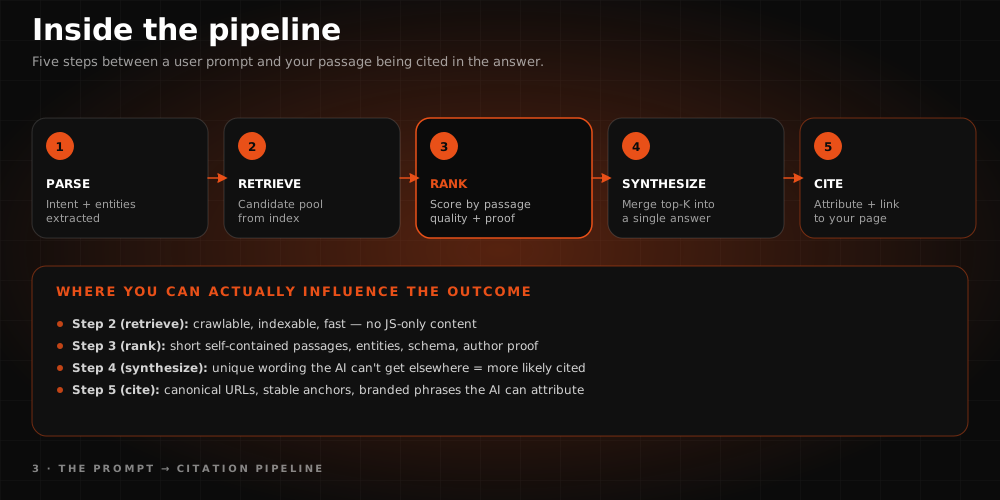
Prompt-Driven GEO works by mapping user prompts to content structures and source signals. Instead of starting with a fixed list of terms, the process starts with the questions users actually ask and the context behind those questions.
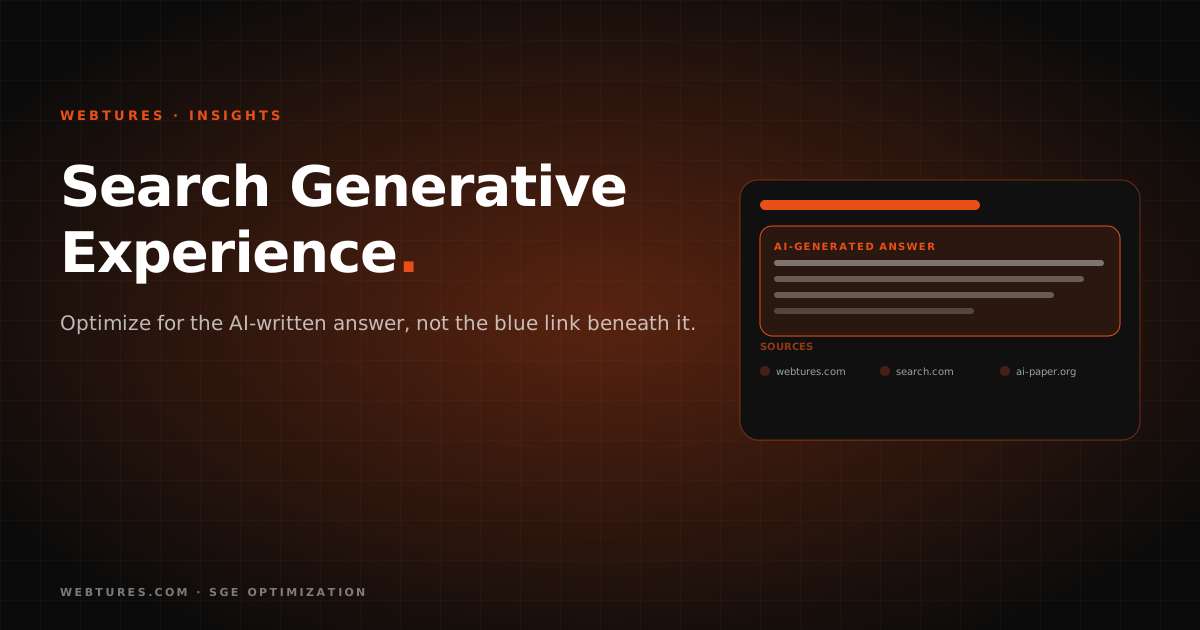
When a user enters a prompt into an AI-powered system, the system may interpret the request, expand it into related subtopics, retrieve information from multiple sources, and generate a synthesized answer. If your content is easy to understand, clearly structured, and aligned with the user’s intent, it has a stronger chance of being considered in this process.
This involves:
- Designing content around natural language prompts and user decision paths,
- Providing short, direct answers before expanding into detailed explanations,
- Covering follow-up questions that users are likely to ask next,
- Clarifying entities, product names, service categories, locations, and brand relationships,
- Supporting claims with examples, data, expert input, or credible references,
- Making pages technically accessible for crawlers and AI systems.
By combining these elements, businesses create content that is useful for people and easier for AI systems to interpret as a potential source.
Key Benefits of Prompt-Driven GEO
A prompt-led approach offers several advantages for brands adapting to AI-powered discovery:
- Stronger AI Search Visibility: Content aligned with real prompts is more likely to match the questions users ask in AI-powered environments.
- Better Answer Relevance: Prompt mapping helps content respond to the actual intent behind a question, not only the surface-level wording.
- Improved Source Eligibility: Clear structure, entity consistency, and trustworthy information make content easier to evaluate as a source.
- More Efficient Content Planning: Prompt clusters help teams identify content gaps, missing comparisons, weak explanations, and overlooked decision-stage questions.
- Better User Experience: Content that anticipates follow-up questions reduces friction and helps users move from discovery to decision.
- Clearer Competitive Positioning: Brands can analyze which prompts competitors appear for and where their own authority can be strengthened.
Core Strategies for Prompt-Driven GEO
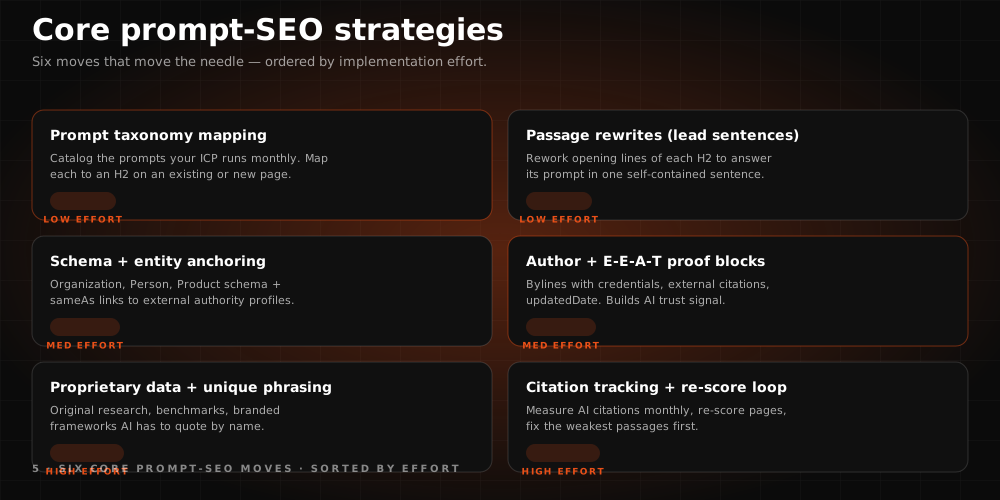
Applying Prompt-Driven GEO successfully requires more than collecting question ideas. The process should connect prompt research, content architecture, technical discoverability, brand authority, and measurement.
Build Prompt Clusters Around Real User Journeys
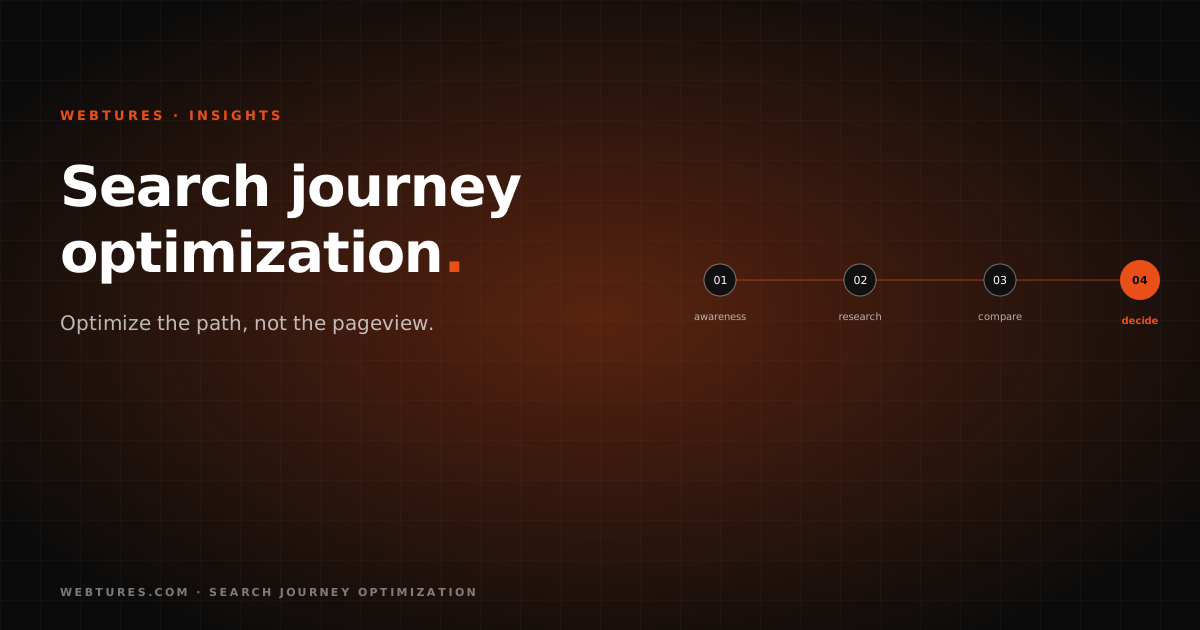
A strong prompt strategy starts with understanding how users move from awareness to comparison and decision. Instead of treating every prompt as a separate page idea, related prompts should be grouped into clusters.
Useful prompt clusters may include:
- Definition prompts such as “What is X?” or “How does X work?”
- Comparison prompts such as “X vs Y” or “Which option is better for small businesses?”
- Risk prompts such as “What are the disadvantages of X?”
- Process prompts such as “How do I implement X step by step?”
- Decision prompts such as “What should I choose for my company?”
These clusters help teams understand not only what users ask, but also what kind of answer format they expect.
Align Prompts with Intent and Answer Format
Every prompt has a different purpose. Some users want a quick definition, while others need a detailed guide, a comparison table, a product recommendation, or a risk analysis. Prompt-Driven GEO works best when the content format matches the intent.
To create this alignment, consider:
- Informational Intent: Use clear definitions, summaries, examples, and explainers.
- Comparative Intent: Use tables, pros and cons, decision criteria, and side-by-side explanations.
- Commercial Intent: Explain use cases, pricing factors, selection criteria, and trust signals.
- Local Intent: Clarify location, service area, business details, reviews, and local entity signals.
- Technical Intent: Provide implementation steps, examples, common issues, and verification methods.
This makes content more useful for users and easier for AI systems to match with the right answer scenario.
Structure Content for AI Readability
Prompt-led content should be easy to scan, summarize, and verify. This does not mean writing only short content. It means using a structure that clearly separates the answer, explanation, evidence, and next steps.
Effective content structures often include:
- A direct answer near the beginning of the page,
- Descriptive headings that match user questions,
- Short paragraphs that explain one idea at a time,
- Tables, bullets, examples, and definitions where they improve clarity,
- Internal links that connect related entities and topic clusters,
- Updated information, author signals, and source references when needed.
The goal is to make the page useful as a human-facing resource and reliable as an AI-readable source.
Strengthen Entity and Source Signals
AI systems rely heavily on context. If a brand, product, service, expert, or location is not clearly defined across the web, answer engines may struggle to understand its relevance.
Prompt-Driven GEO should therefore include entity-focused improvements such as:
- Consistent brand, product, service, and author information,
- Clear Organization, Article, Product, FAQ, Breadcrumb, LocalBusiness, or Course schema where relevant,
- Strong internal links between related pages,
- Reliable third-party mentions and citations,
- Updated profiles, business information, case studies, and expert pages.
These signals help AI systems understand who is speaking, what the page is about, and why the source should be trusted.
Test and Refine Prompt-Led Content
Prompt-Driven GEO is not a one-time content exercise. User behavior, AI Search interfaces, answer formats, and competitor visibility can change over time. Pages should be reviewed and improved regularly.
Key refinement steps include:
- Testing different prompt variations around the same topic,
- Reviewing how AI-powered systems summarize the topic,
- Checking whether your brand appears, is cited, or is omitted,
- Comparing your content with sources that are repeatedly referenced,
- Updating outdated claims, missing examples, weak explanations, and unsupported statements,
- Monitoring Search Console, GA4, brand mentions, referral traffic, and AI visibility tools.
Treating prompt-led pages as living assets helps brands adapt to changes in AI-powered discovery.
Common Mistakes to Avoid
Prompt-Driven GEO can create strong visibility opportunities, but it can also fail when applied as a shallow content tactic. The most common mistakes include:
- Stuffing Prompts with Repeated Terms: Overloading content with the same phrases reduces readability and does not improve source trust.
- Writing Only for AI Systems: If the content does not help real users, it will not create sustainable value.
- Ignoring Source Evidence: Unsupported claims, vague statements, and outdated information weaken credibility.
- Skipping Entity Clarity: Unclear brand, product, author, or service information makes content harder to interpret.
- Neglecting Technical Discoverability: Pages blocked by robots.txt, hidden behind scripts, poorly linked, or missing from sitemaps may not be evaluated properly.
- Not Measuring AI Visibility: Without tracking prompts, answer presence, citations, and brand mentions, teams cannot understand what is improving.
Avoiding these mistakes helps ensure that prompt-led content supports both user value and source eligibility.
Tools and Technologies Supporting Prompt-Driven GEO
Prompt-Driven GEO benefits from a mix of research, content, technical, and measurement tools. These tools help teams discover prompts, structure content, validate technical signals, and monitor visibility across AI-powered discovery environments.
- AI Research and Content Tools: Platforms such as ChatGPT, Gemini, Claude, and NotebookLM can help explore user questions, summarize sources, and create first-draft content structures.
- Prompt and Intent Mapping: Prompt libraries, customer support data, sales calls, People Also Ask results, forum discussions, and internal search data can reveal real user questions.
- Technical Analysis Tools: Screaming Frog, Search Console, schema testing tools, log analysis, and rendering checks help validate crawlability and source accessibility.
- Visibility and Competitor Tools: Ahrefs, Semrush, brand monitoring tools, and AI visibility platforms can help identify where competitors appear and where your brand is missing.
- Generative AI Consulting: Expert support can help businesses build a practical roadmap for prompt strategy, AI Search visibility, content architecture, and measurement.
Together, these tools make it easier to move from guesswork to a structured GEO workflow.
The Future of Prompt-Driven GEO
As AI-powered search experiences continue to evolve, prompt-led visibility will become more connected to source quality, brand authority, technical accessibility, and content usefulness. The future will not be defined by prompt engineering alone. It will be shaped by how well brands understand user questions and prove that their content deserves to be used as a source.
Future developments may include:
- More Complex Prompt Journeys: Users will increasingly ask multi-step questions that combine research, comparison, and decision-making.
- Stronger Source Evaluation: AI systems will continue to rely on signals such as trust, freshness, expertise, and clarity.
- More Multimodal Discovery: Text, images, videos, product data, and local signals may play a larger role in answer generation.
- Closer Human and AI Collaboration: AI can support research and structuring, but human expertise will remain essential for judgment, accuracy, and originality.
- Better Measurement Models: Brands will need to track not only traffic, but also answer presence, citation frequency, prompt coverage, and brand sentiment.
Prompt-Driven GEO gives businesses a practical way to adapt to this change. Brands that understand real user prompts, create reliable content, and strengthen source signals will be better positioned in AI-powered discovery journeys.
Would you like to work with us ?
Share your goals, we'll come back with a custom growth plan within one business day. A strategy lead will reach out personally.
Get in touch