Boost Your SEO Performance with AI Content Auditing
AI content auditing boosts SEO by analyzing quality, relevance, and engagement. Gain insights and optimize content at scale efficiently.

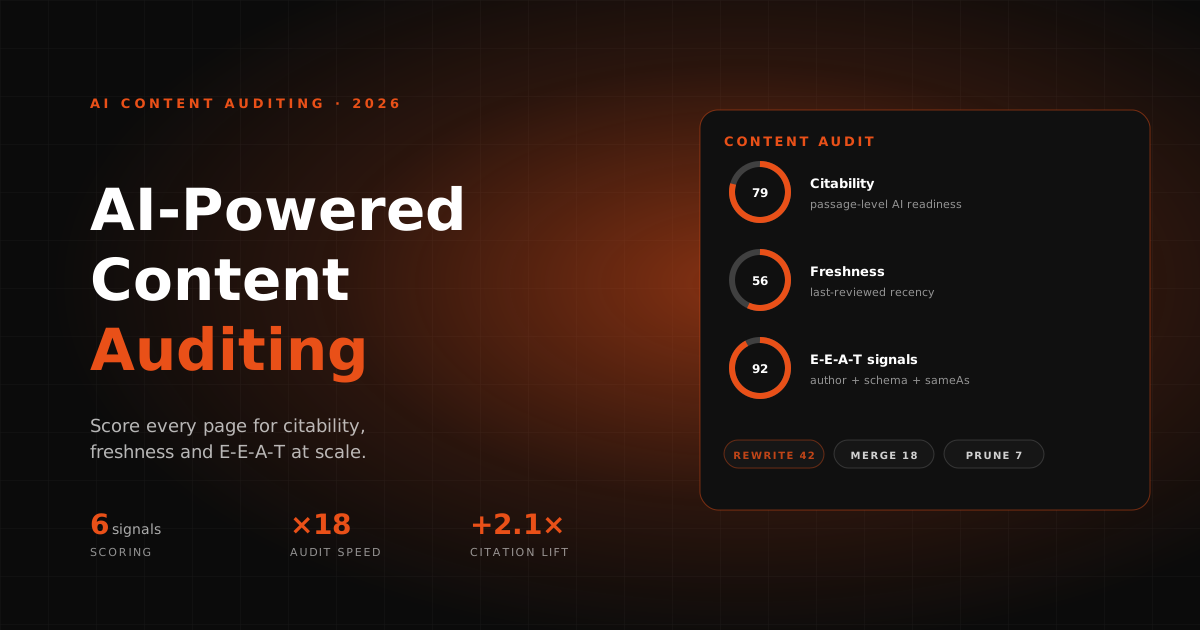
In today’s AI-driven search landscape, publishing content is no longer enough. Brands need to understand whether their content can be discovered, understood, trusted, cited, and reused by generative search systems. AI content auditing has evolved from a performance check into a GEO readiness process. It helps brands evaluate whether their pages are clear enough for users, structured enough for crawlers, and reliable enough for AI answer engines such as ChatGPT, Gemini, Perplexity, AI Overviews, and other generative discovery surfaces.
A modern AI content audit should not only ask “does this page rank?” It should also ask: Can this content answer prompt-based queries? Does it include citation-worthy sections? Are the entities clear? Is the information accurate, current, and attributable? Can AI systems retrieve the right page and understand why it should be used as a source? This is where GEO-focused content auditing becomes a strategic advantage.
What Is AI Content Auditing?
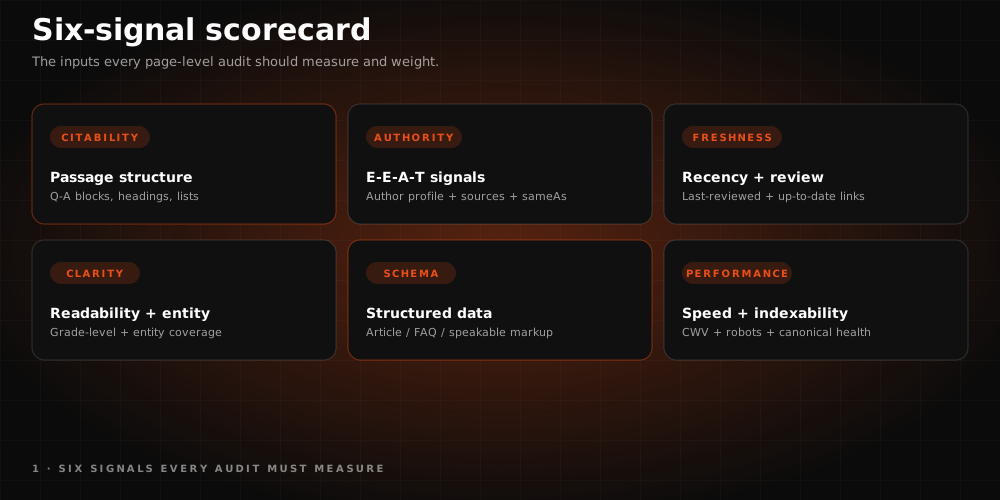
AI content auditing is the process of evaluating digital content with artificial intelligence tools, search data, technical signals, and editorial review to understand how well a page performs across search engines and AI answer systems. In a GEO context, the goal is not only to improve content quality, but to make each page more discoverable, retrievable, and citation-ready.
Unlike traditional manual audits, AI-assisted audits can analyze large content inventories at scale. They can detect patterns across topics, headings, metadata, schema, internal links, content depth, duplicate sections, answer gaps, and entity consistency. However, AI tools should support expert review, not replace it. The strongest audits combine automation with strategic judgment.
A GEO-focused AI content audit looks at multiple factors:
- Prompt coverage: whether the content answers the questions users are likely to ask in AI search environments.
- Citation readiness: whether the page includes clear definitions, concise explanations, statistics, examples, and source-worthy sections.
- Entity consistency: whether brand, product, service, author, location, and topic entities are used clearly and consistently.
- Modern SEO foundations: metadata, headings, internal links, indexability, crawlability, and structured data.
- Trust and accuracy: whether the content is up to date, factually correct, compliant, and aligned with brand standards.
By combining these checks, AI content auditing helps businesses move from content maintenance to AI Visibility improvement. The result is a stronger content library that serves users, search engines, and generative answer systems at the same time.
Why AI Content Auditing Matters for GEO and AI Visibility
Search behavior is changing. Users increasingly ask full questions, compare options through conversational interfaces, and expect direct answers before clicking a result. This shift makes GEO-focused auditing essential. Content must now be optimized for discoverability, interpretation, confidence, and citation, not only for classic ranking signals.
AI content auditing matters because it helps brands:
- Identify answer gaps: find missing, shallow, outdated, or unclear sections that prevent the page from satisfying prompt-based intent.
- Improve AI Visibility: structure content so AI systems can understand the page’s purpose, expertise, and source value.
- Strengthen citation potential: create sections that can be referenced, summarized, or quoted by answer engines.
- Maintain content freshness: detect pages that need updated facts, new examples, stronger evidence, or better topical coverage.
- Connect search and GEO strategy: align Modern SEO foundations with AI Search, entity clarity, and retrievability.
If this content were written today from a GEO-first perspective, the central question would not be “how can AI help us audit for rankings?” It would be “how can AI help us build content that generative systems can trust, retrieve, and cite?”
Key Components of a GEO-Focused AI Content Audit
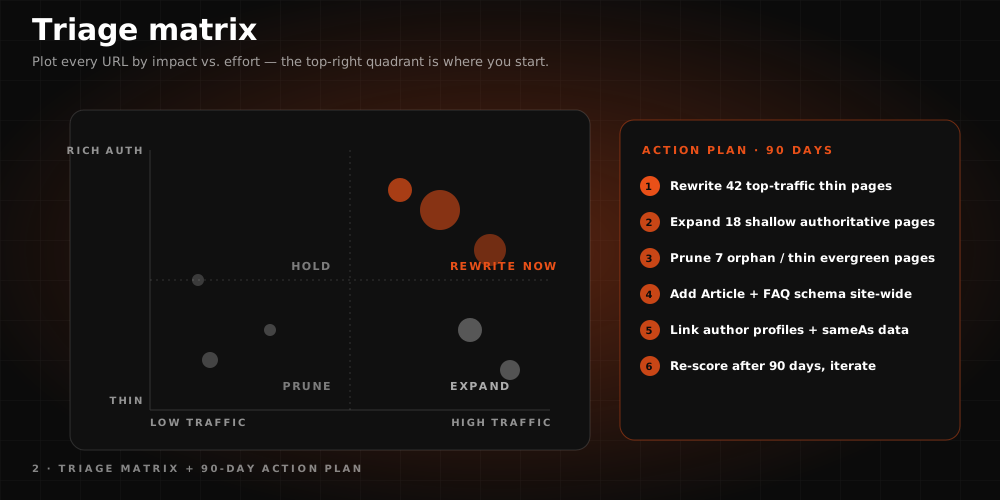
A GEO-focused audit goes beyond simple keyword, readability, or metadata checks. It evaluates whether content is useful for humans and machine-readable enough for AI systems to interpret. The strongest audits combine content quality, technical accessibility, topical authority, structured data, and source trust.
Content Quality and Answer Depth
Content quality analysis is the foundation of any AI-driven audit. In a GEO-first model, quality is measured by how clearly the page answers real user questions and whether those answers are complete enough to be trusted by AI systems.
Key areas include:
- Clarity: definitions, explanations, and examples should be easy to understand.
- Depth: the page should provide more than surface-level commentary.
- Originality: content should include unique expertise, data, examples, or brand perspective.
- Answer structure: important points should be easy to extract through headings, lists, summaries, and concise paragraphs.
AI systems are more likely to trust content that gives clear, well-structured, and complete answers. Thin, generic, or repetitive content weakens both user trust and AI Visibility.
Prompt Coverage and Search Intent Mapping
GEO auditing requires moving from keyword-only thinking to prompt and intent coverage. Users no longer search only with short phrases. They ask comparison questions, task-based questions, follow-up questions, and decision-stage prompts.
Key areas include:
- Prompt clusters: identify the questions users ask before, during, and after a purchase or decision.
- Answer gaps: detect missing sections that prevent the page from satisfying conversational queries.
- Comparison intent: check whether the page helps users compare methods, tools, services, benefits, and risks.
- Decision support: confirm that the content includes criteria, next steps, and practical recommendations.
This approach makes content more useful for both users and AI answer systems because it aligns the page with how people actually ask for information today.
Citation Readiness and Source Value
Citation readiness measures whether a page contains information that answer engines can confidently reference. A page may be well written, but if it lacks clear statements, evidence, or structured explanations, it may not become a strong source candidate.
Key areas include:
- Clear definitions: include short, direct explanations for core concepts.
- Evidence: support claims with data, examples, expert input, or reliable references.
- Extractable sections: use lists, tables, summaries, and checklists where they improve clarity.
- Attribution: make author, brand, methodology, and source context easy to understand.
Strong citation-ready content does not try to manipulate AI systems. It gives them clear, accurate, and useful information that deserves to be selected as a source.
Entity Consistency and Topical Authority
AI systems rely heavily on entity understanding. A GEO-focused audit should check whether the page clearly communicates who the brand is, what it offers, which topics it covers, and how those topics connect to related pages.
Key areas include:
- Brand entity: the company name, service focus, and expertise should be consistent across the website.
- Topic entity: terms, definitions, and related concepts should be used consistently.
- Internal linking: related pages should connect naturally to build topical depth.
- Structured data: schema should support the visible content and clarify page type, organization, article, FAQ, product, or service context.
Entity consistency helps answer engines understand not only the content of a single page, but also the authority of the brand behind it.
Technical Discoverability Checks
Even the strongest content can fail in AI Search if it is hard to crawl, render, index, or retrieve. Technical discoverability ensures that crawlers and AI systems can access the right content without conflicting signals.
Key areas include:
- Indexability: important pages should not be blocked by noindex, robots.txt, or incorrect canonical tags.
- Crawlability: internal links, sitemap signals, and server responses should help crawlers discover important pages.
- Renderability: critical content should be accessible even when JavaScript rendering is limited or delayed.
- Schema accuracy: structured data should match visible content and avoid unsupported or misleading claims.
These checks connect Modern SEO foundations with GEO performance. If the right page cannot be discovered or understood, it cannot become a reliable answer source.
How AI Tools Transform Content Auditing for GEO
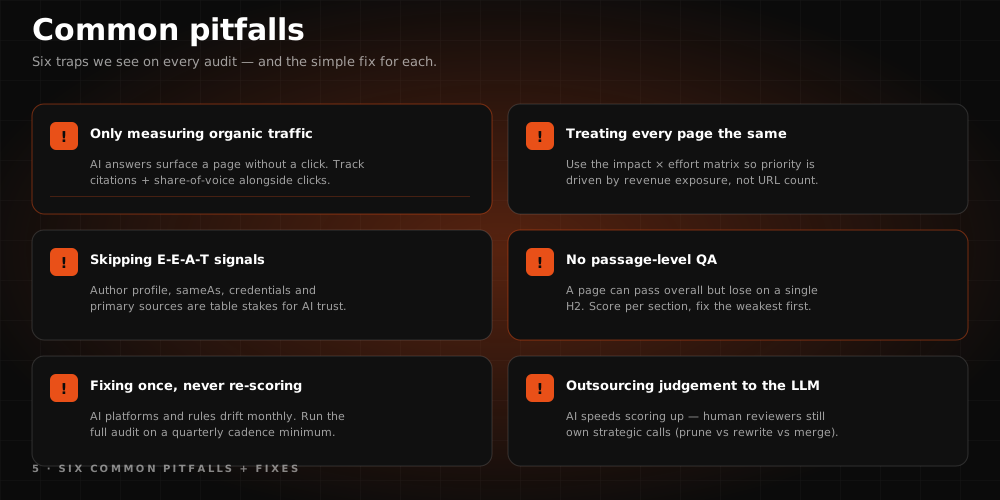
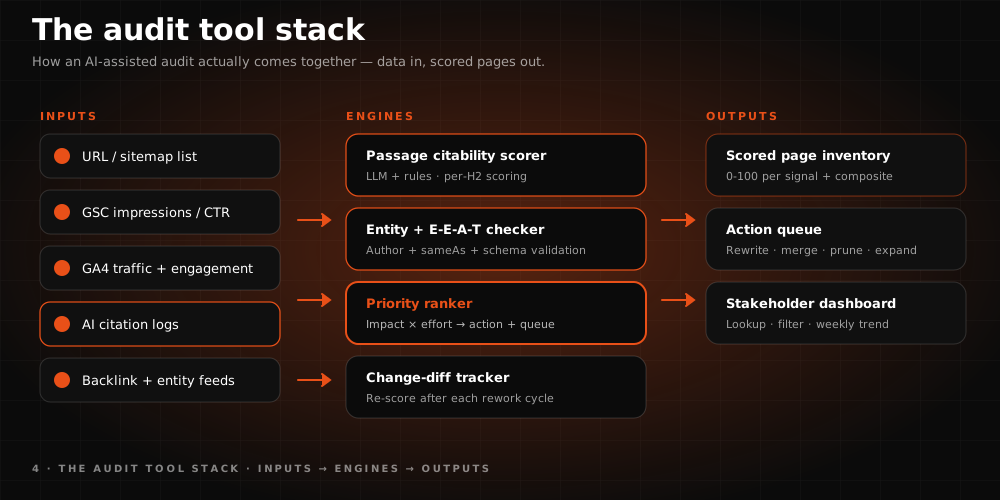
Traditional content audits often rely on manual reviews, spreadsheets, and isolated page checks. AI tools transform this process by introducing speed, scale, pattern recognition, and continuous monitoring. For GEO, this matters because AI Visibility depends on many signals working together: content clarity, technical accessibility, topical authority, freshness, trust, and source value.
Key advantages include:
- Scale: AI can review hundreds or thousands of pages to identify recurring quality, structure, and coverage problems.
- Pattern detection: AI can detect repeated weak introductions, missing answer blocks, thin sections, or inconsistent terminology.
- Prompt mapping: AI can group user questions into prompt clusters and compare them against existing content.
- Prioritization: AI can help classify pages by impact, risk, effort, and AI Visibility opportunity.
- Continuous monitoring: AI can support recurring checks for outdated facts, content decay, and changing user intent.
At this stage, many organizations also turn to Generative AI Consulting to design tailored workflows. The goal is not to automate content judgment entirely, but to build a repeatable audit system that turns AI analysis into better editorial decisions.
Step-by-Step Process for Conducting a GEO-Focused AI Content Audit
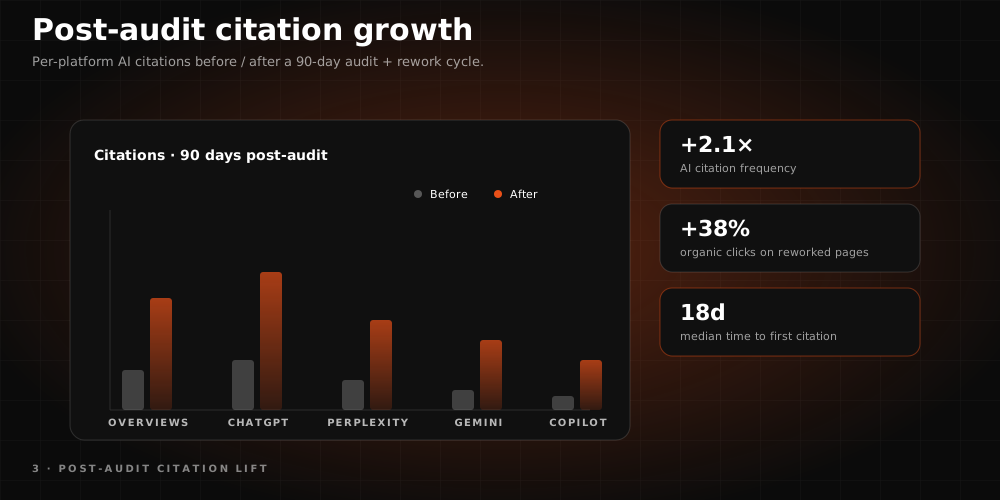
A GEO-focused AI content audit becomes more effective when it follows a clear workflow. Each step should connect analysis with action, so the audit does not remain a spreadsheet exercise.
Define GEO Goals and Audit Scope
Every successful AI content audit begins with clear goals. Instead of focusing only on traffic or rankings, define what AI Visibility improvement means for the business.
- Which content types will be audited: blog posts, product pages, service pages, landing pages, or knowledge hubs?
- Which markets, languages, or audience segments matter most?
- Which AI Search surfaces are important for the brand?
- Which pages should become citation-worthy assets?
Clear scope prevents the audit from becoming too broad and helps teams focus on the pages that can create the highest strategic value.
Collect and Organize Content Data
AI tools work best when they have structured, complete, and clean inputs. Before analysis begins, collect data that reflects both content quality and discoverability.
Key actions include:
- Export URLs and group them by content type, topic, funnel stage, and language.
- Gather metadata, headings, word count, schema type, canonical status, and indexability signals.
- Pull performance data from analytics, Search Console, CRM, and conversion tracking systems.
- Collect prompts, questions, sales objections, support tickets, and internal subject matter insights.
This creates a stronger dataset for evaluating whether each page is only published, or actually useful for GEO and AI Search.
Run AI-Powered Content and Prompt Analysis
Once the data is organized, AI can analyze the content for structure, relevance, prompt coverage, entity clarity, and answer readiness.
Key actions include:
- Identify missing questions that the page should answer.
- Detect shallow sections, repeated phrasing, outdated explanations, and vague claims.
- Compare page coverage against competitor pages and answer engine expectations.
- Map content to prompt clusters, search intent, and decision-stage needs.
This step turns the audit from a keyword checklist into a prompt-led content evaluation.
Evaluate Technical Discoverability and Structured Data
After analyzing the content itself, review whether the page can be accessed, interpreted, and trusted by crawlers and AI systems.
Key actions include:
- Check indexability, canonical tags, robots.txt, sitemap inclusion, and HTTP status codes.
- Review page speed, mobile experience, renderability, and internal link depth.
- Confirm that structured data matches visible content and supports entity clarity.
- Check whether important content is hidden behind scripts, tabs, forms, or blocked assets.
Technical discoverability is the bridge between content quality and AI Visibility. A page cannot become a strong answer source if systems cannot reliably access or parse it.
Check Trust, Compliance, and Accuracy
A strong AI content audit must verify whether the content is accurate, transparent, and safe to rely on. This is especially important for YMYL topics such as health, finance, law, education, and enterprise technology.
Key actions include:
- Validate facts, statistics, product claims, service claims, and dates.
- Confirm author expertise, reviewer information, source attribution, and update history.
- Check brand consistency, terminology, tone of voice, and legal compliance.
- Review accessibility and readability for different audience segments.
Trust is not a decorative layer in GEO. It is one of the conditions that helps content become a reliable source for users and AI systems.
Measure Engagement, Assisted Visibility, and Business Impact
AI Visibility cannot be measured only by clicks. Some AI-driven discovery journeys may influence brand awareness, comparisons, and decisions before the user visits the website. For this reason, engagement and assisted visibility metrics should be reviewed together.
Key metrics include:
- Search Console queries, impressions, CTR, and average position.
- Analytics engagement metrics such as scroll depth, engaged sessions, conversions, and assisted conversions.
- Brand search growth, referral mentions, third-party citations, and branded demand.
- AI Search visibility checks across target prompts and answer surfaces.
This measurement model helps teams understand whether content improvements are creating visibility, trust, and demand across the full search journey.
Generate a Prioritized GEO Action Plan
Once the audit is complete, the findings should be translated into clear actions. Not every issue has the same business value, so recommendations should be prioritized by impact, urgency, effort, and GEO opportunity.
Key actions include:
- Refresh outdated content with new evidence, examples, expert input, and clearer answer sections.
- Add missing prompt coverage, comparison blocks, FAQs, and direct-answer sections.
- Improve entity consistency through internal linking, schema, author details, and brand messaging.
- Consolidate overlapping pages and strengthen hub-cluster structures.
- Fix technical barriers that reduce crawlability, renderability, or retrievability.
This step bridges the gap between analysis and execution. A GEO-focused audit is valuable only when it leads to better pages, clearer answers, stronger source signals, and measurable improvement.
AI Content Audit Checklist
Use the following checklist to evaluate whether a page is ready for GEO and AI Visibility:
- Does the page answer the main prompt clearly in the first sections?
- Are related prompts, follow-up questions, and comparison needs covered?
- Are definitions, steps, examples, and key takeaways easy to extract?
- Are brand, product, service, topic, and author entities clear?
- Is structured data aligned with visible content?
- Is the page indexable, crawlable, internally linked, and technically accessible?
- Are claims supported by evidence, source context, or expert review?
- Is the content updated, accurate, and differentiated from competing pages?
- Does the page support both user decisions and AI answer retrieval?
AI content auditing is most powerful when paired with an expert-led content strategy. Webtures' digital marketing services include content audits aligned with GEO optimization principles, helping brands build content that performs across search engines, AI answer systems, and decision journeys.
Would you like to work with us ?
Share your goals, we'll come back with a custom growth plan within one business day. A strategy lead will reach out personally.
Get in touch