
244% Organic Click Growth In Six Months At Paket Taxi
Visibility gained across more than 260 new courier-intent queries, with 97.8% of SI-driven traffic arriving through ChatGPT.
Client: Paket · pakettaxi.com
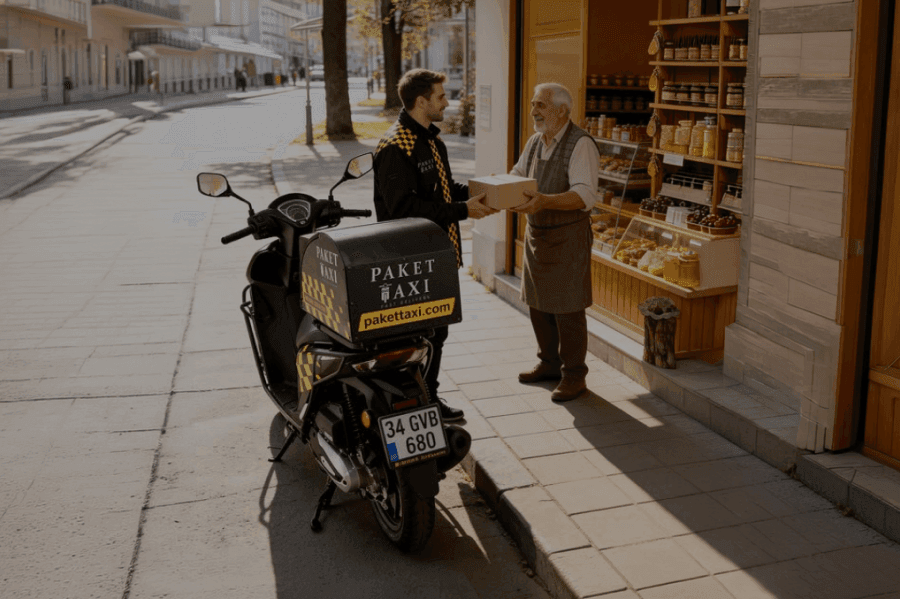
Paket Taxi achieved strong visibility both in traditional search results and in user traffic originating from SI platforms through Generative Engine Optimization (GEO) and SEO initiatives carried out by Webtures.
One of the most notable outcomes of the project was that the courier-focused content and search visibility built through SEO gradually translated into SI Search traffic as well. Between January 1, 2025 and January 1, 2026, approximately 500 users and more than 600 sessions were generated from SI platforms such as ChatGPT, Gemini, Perplexity, and Copilot. The average session duration of SI-referred users reached 2 minutes and 39 seconds, while approximately 98% of SI sessions originated from ChatGPT.
At the same time, SEO/GEO performance reports showed that, in the three-month comparison period, organic clicks increased from 6.18K to 21.3K, while impressions rose from 116K to 312K. As a result, Paket Taxi’s digital growth became visible not only in traditional search results but also across generative SI-supported user journeys.
| Key Performance Indicator | Result |
|---|---|
| SI-referred users | ≈500 |
| SI-referred sessions | 600+ |
| SI-referred page views | ≈900 |
| ChatGPT share of SI traffic | 97.8% |
| Average session duration for SI users | 2 min. 39 sec. |
| 6-month organic click growth | ≈244% |
| 6-month organic impression growth | 169% |
| New courier-focused keyword visibility | 260+ queries |
Why Did Paket Taxi Need SEO and GEO Support?
The courier and rapid delivery industry in which Paket Taxi operates is highly competitive across both branded searches and high-commercial-value generic queries. At the beginning of the project, the main need was not only for the brand to appear in searches for its own name, but also to gain visibility for non-branded user intents such as “kurye” (courier), “kurye hizmeti” (courier service), “motokurye” (motorcycle courier), and queries related to becoming a courier.
Competitor analyses showed that leading players in the industry were generating a significant portion of their organic traffic from generic courier-related searches. Paket Taxi, on the other hand, did not yet have sufficient organic coverage across this query group.
At the same time, user search behavior was evolving. Queries such as “How to become a courier?”, “How much does a courier earn?”, and “How to become a Migros courier?” were no longer limited to traditional search engines; they were also becoming topics users explored through ChatGPT and similar generative SI platforms.
For this reason, the project’s visibility strategy was designed not to remain limited to traditional SEO, but to address both search engines and SI Search experiences within the same content ecosystem.
SEO and GEO Goals Defined for the Paket Taxi Project
The primary goals of the project were to increase organic visibility for non-branded courier-related searches, strengthen Paket Taxi’s topical authority within the industry, and cover the user journey from initial information discovery through to the application stage across search channels.
Accordingly, the objective was not only to increase traffic, but also to expand the number of queries for which the brand was visible and to ensure that the content ecosystem being created could also gain traction within SI Search experiences.
| Focus Area | Goal |
|---|---|
| Generic visibility | Gain organic rankings for “kurye” and related queries |
| Query coverage | Increase the number of non-branded keywords for which Paket Taxi is visible |
| Content authority | Expand informational coverage around becoming a courier, earnings, working models, and services |
| SI Search visibility | Support the discoverability and usability of content by generative SI systems |
| User journey | Facilitate the transition from informational searches to conversion points such as applications |
| Technical performance | Build a healthy technical infrastructure supporting both organic and SI visibility |
What Kind of SEO and GEO Strategy Did Webtures Implement for Paket Taxi?
Webtures implemented a strategy for Paket Taxi that combined technical SEO, content optimization, semantic authority, and generative SI visibility.
At the core of the approach was the idea that a user journey beginning with the keyword “kurye” should not be treated as a single search query, but rather as a topic cluster consisting of interconnected intents such as service research, becoming a courier, understanding earnings, researching brands, and submitting an application.
While this structure created broader visibility in traditional search results, the same content gradually began attracting users from generative platforms such as ChatGPT, producing a measurable GEO outcome.
| Strategic Work Area | Approach Implemented |
|---|---|
| Technical SEO | Optimizations were carried out for crawlability, site health, metadata, and page performance |
| Generic query visibility | High-value searches such as “kurye,” “kurye hizmeti,” “motokurye,” and related queries were targeted |
| Content and semantic authority | Content clusters were developed around becoming a courier, income models, working models, and industry-related questions |
| Search intent | Informational, commercial, and application-oriented user intents were addressed together |
| GEO and SI Search | Content structures that generative SI systems could understand and use for direct answers, with strong topical relationships, were supported |
| User journey | The transition from informational content to application and service pages was strengthened |
| Performance tracking | Organic traffic, keyword visibility, and traffic from SI platforms were evaluated together |
Technical SEO and SI Accessibility Initiatives
The website’s technical health, crawlability, page experience, and the ability of search engines to correctly understand its content were evaluated.
Meta title and description structures, technical SEO health indicators, and page performance were included in the optimization roadmap. The goal on the technical side was not only to improve traditional ranking signals, but also to ensure that content was delivered through an infrastructure that was accessible, understandable, and contextually clear for both search engines and generative systems.
During the first four months of the project, a total of 33 tasks covering different technical and content-related areas were created and the optimization process was managed systematically.
Content and Semantic Authority Initiatives
The content strategy focused directly on real questions users ask about the courier industry.
Through content structures created around “kurye,” “kurye hizmeti,” “Migros kurye,” “araçlı kurye,” and related searches, Paket Taxi was positioned not only as a service provider but also as a source of information about the courier ecosystem.
Answering questions that users considering courier work typically ask during their decision-making process expanded non-branded organic visibility while also creating a content base that later gained traction in SI Search.
One of the clearest indicators of this was that pages such as “How to Become a Migros Courier? 2025 Salaries” and “What Is a Vehicle Courier and How Much Do They Earn?” appeared among landing pages receiving users from SI platforms.
GEO and SI Visibility Initiatives
Paket Taxi’s content structure was also evaluated based on the types of questions users ask generative SI systems. Including directly answerable topics such as the process of becoming a courier, income models, and service research within the content architecture supported the brand’s discoverability across the SI Search ecosystem.
The impact of this approach was also directly measurable through web analytics.
| SI Traffic Metric | Result: Jan. 1, 2025 – Jan. 1, 2026 |
|---|---|
| SI-referred users | 483 |
| SI-referred sessions | 603 |
| SI-referred page views | 872 |
| Average session duration | 2 min. 39 sec. |
| Events per session | 5.18 |
| ChatGPT share of SI traffic | 97.8% |
| Mobile device share | 75.5% |
| Desktop device share | 24.4% |
ChatGPT clearly stood out in the traffic source distribution. 97.8% of SI sessions originated from ChatGPT, while the remaining traffic came from other generative platforms such as Gemini, Perplexity, and Copilot.
This result demonstrated that Paket Taxi’s GEO performance was not limited to having the brand mentioned in SI-generated answers; it also showed that generative platforms were capable of driving real users to the website.
User Experience and Conversion Optimization
The objective of GEO visibility was not only to generate traffic, but also to move users toward a meaningful next step.
The strongest indicator of this relationship in the SI traffic report was the application page. Over the one-year measurement period, the application page became the strongest landing page for SI traffic, generating approximately 194 users and 242 SI-referred sessions.
An analysis of the leading SI-referred landing pages revealed a broad user journey ranging from informational content through to conversion-oriented pages.
| Top SI-Referred Landing Page | Users | Sessions |
|---|---|---|
| Application page | 194 | 242 |
| Homepage | 91 | 107 |
| How to Become a Migros Courier? 2025 Salaries | 61 | 74 |
| What Is a Vehicle Courier and How Much Do They Earn? | 26 | 27 |
As a result, SI Search visibility did not remain limited to a traffic channel serving informational blog content; it became a source capable of directing users into Paket Taxi’s conversion journey.
The fact that 75.5% of SI-referred traffic came from mobile devices also highlighted the importance of the mobile user journey across both application and content experiences.
What Initiatives Were Carried Out for the Paket Taxi Project?
Webtures carried out initiatives across technical SEO, content, semantic structure, and user experience to improve Paket Taxi’s visibility across both organic search and generative SI environments.
| Work Area | Initiatives Carried Out |
|---|---|
| Technical SEO | Site health, crawlability, and indexability checks |
| Meta optimizations | Improvements to meta title and description fields |
| Page experience | Page performance and user experience improvements |
| Keyword strategy | Keyword research for generic courier-related queries |
| Semantic content | Creation of topic clusters around “kurye” and related concepts |
| Question-focused content | Content development targeting users’ informational and research intent |
| Internal linking and user journey | Strengthening relationships between informational content, application pages, and service pages |
| Competitor analysis | Analysis of competitors’ organic queries, content, and visibility strategies |
| GEO and SI Search | Tracking SI-referred traffic and landing page performance |
What Results Did Webtures’ SEO and GEO Initiatives Deliver?
The results achieved for Paket Taxi demonstrated how visibility gained through SEO gradually expanded into a broader digital visibility ecosystem.
While the brand’s coverage across generic organic queries grew significantly, the same topical and content structure also began attracting users from generative SI platforms.
| Key Success Area | Measurable Result |
|---|---|
| 3-month organic clicks | Increased from 6.18K to 21.3K |
| 3-month organic click growth | ≈244% increase |
| 3-month organic impressions | Increased from 116K to 312K |
| 3-month organic impression growth | 169% increase |
| Courier-focused keyword coverage | Visibility across 260+ queries |
| Courier-focused monthly traffic | ≈2,000 |
| SI-referred users | ≈500 |
| SI-referred sessions | 600+ |
| SI-referred page views | ≈900 |
| ChatGPT share of SI traffic | 97.8% |
Organic Traffic and Search Visibility Results
In the reported three-month comparison, organic clicks increased from 6.18K to 21.3K. This represented approximately 244% growth.
During the same period, organic impressions increased from 116K to 312K, representing a 169% increase.
| Organic Performance Metric | Previous Period | Recent Period | Change |
|---|---|---|---|
| 3-month organic clicks | 6.18K | 21.3K | ≈244% increase |
| 3-month organic impressions | 116K | 312K | 169% increase |
A shorter-term comparison also showed that the upward trend continued. During the latest 28-day period, Paket Taxi generated approximately 8.3K organic clicks, representing a 50.09% increase compared with the previous 28 days. Impressions reached approximately 136K, growing by 59.99%.
Compared with the beginning of the engagement, the change in daily organic performance was even more pronounced.
| Performance Metric | Starting Level | Level Reached |
|---|---|---|
| Daily organic clicks | ≈6 | ≈502 |
| Daily organic impressions | ≈623 | ≈7,190 |
A significant portion of this growth came from newly gained visibility across non-branded courier-related searches. Paket Taxi gained rankings for more than 260 keywords across the “kurye” and related query cluster, where visibility had previously been highly limited.
| Target Query / Query Group | Result Achieved |
|---|---|
| “Kurye” and related queries | Rankings across 260+ keywords |
| “Kurye” | ≈500 monthly organic visits |
| Broader courier-focused query group | ≈2,000 monthly organic visits |
| “Kurye hizmeti” | 150+ monthly organic visits |
The keyword “kurye” alone began generating approximately 500 monthly organic visits, while the broader courier-focused query cluster generated approximately 2,000 monthly organic visits. The “kurye hizmeti” query generated 150+ monthly visits, while work on the “Migros kurye” query resulted in a ranking of 4th position.
Visibility Results Across SI Platforms
The most important outcome on the SI Search side was that generative SI platforms became not only a new brand visibility surface for Paket Taxi, but also a measurable traffic acquisition channel.
Over the one-year SI traffic measurement period, approximately 500 users and more than 600 sessions reached the Paket Taxi website from platforms such as ChatGPT, Gemini, Perplexity, and Copilot.
| GEO and SI Search Indicator | Result |
|---|---|
| Users from SI platforms | 500+ |
| Sessions from SI platforms | 600+ |
| SI-referred page views | 900+ |
| ChatGPT share of SI traffic | 97.8% |
| Average session duration of SI users | 2 min. 39 sec. |
| Events per session | 5.18 |
| Strongest SI landing page | Application page |
| SI-referred sessions to application page | 242 |
The fact that approximately 98% of SI traffic came from ChatGPT showed that the brand generated particularly strong referral traffic from ChatGPT-supported user research journeys.
More importantly, SI-referred visits were not limited to content consumption. The fact that the application page became the strongest landing page for SI traffic demonstrated that generative SI visibility extended into stages of the user journey that were close to conversion.
From this perspective, the value of GEO for Paket Taxi became measurable not simply through being “mentioned by SI,” but through SI-discovered content bringing users to the brand’s own digital properties and into its application flow.
The Outcome of the Paket Taxi and Webtures Partnership
The GEO strategy implemented by Webtures helped Paket Taxi move from a relatively limited level of generic visibility to a structure capable of gaining visibility across important non-branded searches within the courier industry.
In the three-month comparison period, organic clicks increased by approximately 244%, while impressions grew by 169%, and the brand gained visibility across more than 260 new courier-related keywords.
The impact of this organic growth also extended beyond traditional search results. Paket Taxi’s content generated approximately 500 users and more than 600 sessions from ChatGPT and other generative SI platforms, while the application page became the strongest entry point for SI-referred users.
As a result, the semantic authority and content visibility built through SEO for Paket Taxi were complemented on the GEO side by real user traffic originating from generative systems. The project demonstrated how traditional search visibility and SI Search visibility can be approached not as separate channels, but as a single digital growth model in which both reinforce one another.