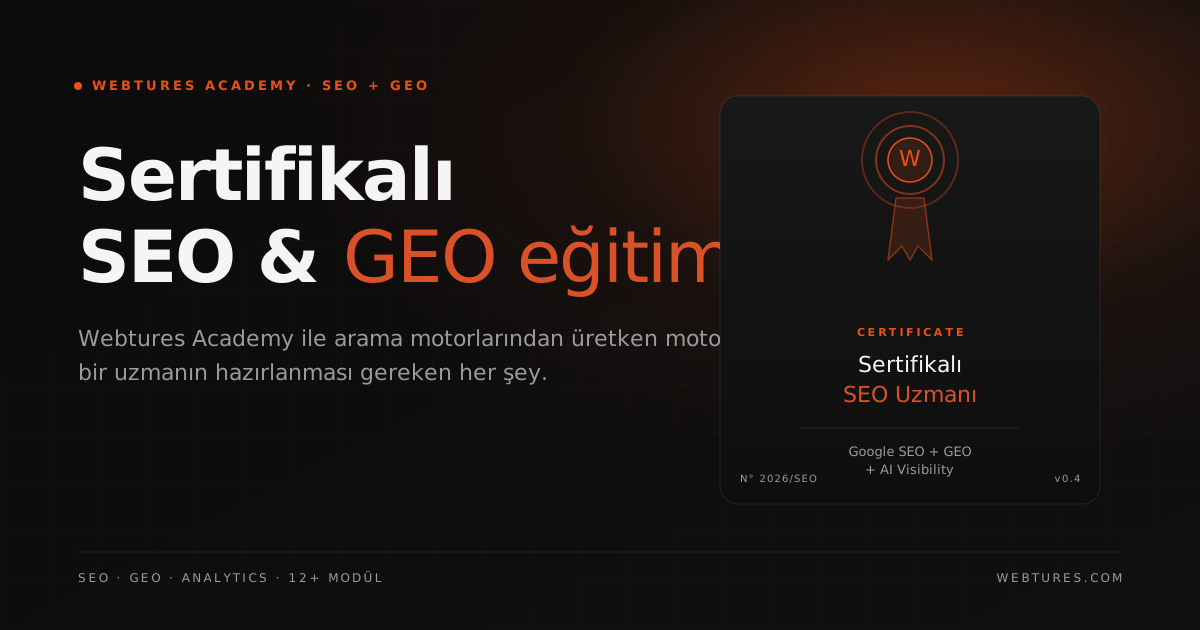
Certified Google GEO Specialist Training
Shape your digital future with GEO training. Advance your expertise with Webtures’ certified programs and stand out in the digital competition.

SEO Training is an educational program that teaches both traditional search optimization and the new visibility signals shaped by GEO, AI Search, and answer engines. In this program, you can learn topics such as keyword research, entity-based content planning, on-page optimization, technical signals, backlink and authority building, structured data, analytics, and AI-readable content architecture—so your website can become more visible across search engines and generative AI results.
If you want to improve yourself professionally or manage your brand’s organic visibility across Google, AI Overviews, ChatGPT-style answer systems, and other AI-powered discovery channels, you can take SEO training. In this article, we’ll walk you through SEO training from zero to advanced level with a modern GEO and AI Search perspective.
What Is SEO Training?
SEO training is a comprehensive and certified course that teaches optimization techniques to make websites more visible in search engines, generative search experiences, and AI-powered answer environments. It covers a broad range of topics, from fundamental search concepts to advanced GEO strategies.
Throughout the program, participants explore how search engine algorithms, AI-generated answers, entity recognition, keyword research, content optimization, technical SEO, structured data, backlink strategies, and user experience signals work together. Participants not only learn the theory but also gain hands-on experience through practical exercises on real projects. The training is structured into beginner, intermediate, and advanced levels. This way, beginners can build a strong foundation, while advanced learners can deepen their knowledge with up-to-date SEO, GEO, and AI Search strategies. By the end of the program, participants have the skills required to increase organic visibility and strengthen their discoverability in AI-assisted search journeys.
What Does SEO Training Do?
SEO training equips you with the knowledge and skills needed to improve visibility in search engine results and AI-generated answer surfaces. When applied correctly, modern optimization techniques don’t just improve rankings; they also help your brand become easier for algorithms, language models, and users to understand, cite, and trust.
With this training, participants learn to:
- Analyze websites using professional tools and identify existing issues,
- Correctly implement on-page SEO and GEO signals (title tags, meta descriptions, answer-focused headings, URL structure, entity clarity),
- Apply authority-building methods (backlink strategies, digital PR, brand mentions, third-party trust signals),
- Address technical and AI visibility topics (speed optimization, mobile-friendliness, indexing, crawling, schema markup, and machine-readable content structure),
- Evaluate market opportunities through competitor, SERP, and AI answer analysis,
- Keep strategies current by understanding search engine algorithms, generative AI systems, and evolving answer-engine behavior.
How Can You Get SEO Training?
SEO has become one of the most important areas of digital marketing, but modern search visibility now also includes GEO, AI Search optimization, and answer-engine visibility. There are several options for anyone who wants to learn how organic discovery works across both classic results and generative AI experiences.
Common ways to learn modern SEO and GEO include:
- Online Courses and Certification Programs: You can learn SEO, GEO, and AI Search fundamentals step by step through certified courses prepared by globally recognized education platforms and digital marketing agencies. These programs typically cover a wide range of topics, from beginner-level concepts to advanced technical and content visibility techniques.
- Books and Resources: Up-to-date books, research papers, and industry resources that explain search behavior, AI retrieval, and content authority are strong sources for building theoretical knowledge.
- Blogs and Articles: Current blog posts and guides where SEO, GEO, and AI Search experts share their experience provide practical insights.
- Hands-On Practice: The most effective way to learn is by doing. Optimizing your own website, improving content structure, testing schema markup, and analyzing AI-generated answers helps you turn theory into practice.
- Workshops and Webinars: Live sessions led by experts help you learn up-to-date information and get your questions answered instantly.
The most important consideration when choosing SEO training is making sure the content is up to date and that the program includes practical applications—not just theory. Since search engine algorithms and AI-powered discovery systems continuously evolve, outdated keyword-focused information alone won’t be enough to succeed.
What Are the Stages of SEO Training?
SEO training is typically delivered in three stages—beginner, intermediate, and advanced—to support participants with different skill levels. This structure allows those starting from scratch and those looking to elevate their knowledge to a professional level to progress step by step. A SEO and AI visibility level assessment test conducted before training helps determine the most appropriate starting point.
Each stage includes not only theory, but also hands-on work on real projects. This way, participants don’t just learn concepts—they reinforce them through practice. By the end of the program, participants gain the knowledge and skills to run SEO work effectively while adapting content for GEO, AI Search, and LLM-readable discovery.
Beginner Level SEO Training: Search and AI Visibility Fundamentals
This stage is designed for those new to SEO to build a solid foundation. Participants learn how search engines work, how AI answer systems interpret web content, and how modern organic visibility is formed. The program covers:
- The importance and role of organic visibility in digital marketing,
- How search engine algorithms and AI-powered answer systems operate,
- Introduction to keyword research, search intent, and entity-based targeting,
- Title tags, meta descriptions, URL structures, answer-focused headings, and content organization,
- The impact of user experience, content clarity, and trust signals on SEO and GEO performance.
After completing this level, participants have the competence to handle fundamental website optimizations.
Intermediate Level SEO Training: Technical SEO, GEO Signals, and Strategic Approaches
Designed for participants who already have the basics, intermediate training focuses on the technical, strategic, and AI visibility aspects of organic growth. The goal is to perform deeper analysis and develop a professional approach for mid-scale projects. Topics include:
- Core elements of technical SEO (site speed, mobile-friendliness, crawling, rendering, and indexing),
- XML sitemaps, robots.txt management, structured data, schema markup, and machine-readable page signals,
- Conducting competitor analysis, SERP analysis, AI answer analysis, and using professional tools effectively,
- Building content strategy, creating user-focused content, and structuring pages for answer engines,
- Backlink basics, digital PR, brand mentions, entity authority, and third-party trust signals.
By the end of this stage, participants can implement professional on-page, technical, off-page, and GEO-aligned strategies.
Advanced Level SEO Training: Professional Strategies, Global SEO, and AI Search
Advanced training is designed for those who want to become SEO specialists, GEO consultants, or managers of large-scale organic growth projects. The objective is to learn advanced optimization techniques and build sustainable strategies for both search engines and AI-powered discovery systems. This stage covers:
- Advanced technical SEO (JavaScript SEO, log analysis, advanced site structure optimization, and AI crawler accessibility),
- International SEO, multilingual GEO, hreflang strategy, and cross-market entity consistency,
- Advanced backlink strategies, digital PR, authority management, and increasing brand visibility in AI-generated answers,
- Defining KPIs, measuring SEO and AI visibility performance, and professional reporting,
- AI, machine learning, LLM behavior, and data-driven optimization practices,
- SEO, GEO, and AI Search planning for large-scale enterprise projects.
At the end of this stage, participants reach a level where they can solve complex SEO problems, design long-term GEO and AI Search strategies, and provide professional consulting.
What Topics Are Covered in SEO Training?

SEO training is built around a broad curriculum that covers both foundational concepts and advanced optimization techniques for search engines, AI Overviews, answer engines, and LLM-assisted discovery—so participants can progress step by step. The program includes practical examples alongside theory, enabling participants to gain lasting experience by applying what they learn to real projects.
Modern SEO training typically covers the following topics:
- Introduction to SEO, GEO, and Core Concepts: What SEO is, what GEO adds, why organic visibility matters, how search engines and AI answer systems work.
- Keyword, Intent, and Entity Research: Keyword analysis, user intent mapping, entity identification, tool usage, and long-tail query opportunities.
- On-Page SEO and Answer-Focused Content: Title tags, meta descriptions, URL structure, content optimization, image SEO, internal linking, concise answer blocks, and source clarity.
- Technical SEO and Machine-Readable Signals: Site speed optimization, mobile-friendliness, crawling and indexing, structured data (Schema), sitemap and robots.txt management, AI crawler accessibility.
- Authority, Digital PR, and Trust Signals: Backlink-building strategies, brand mentions, third-party citations, digital PR, social proof, and entity authority.
- Content Strategy for SEO and GEO: Developing user-focused content, preparing blog and category content, creating LLM-readable summaries, improving topical depth, and conducting content audits.
- Competitor, SERP, and AI Answer Analysis: Reviewing competitor websites, analyzing AI-generated answer patterns, and using professional tools such as Semrush, Ahrefs, Google Search Console, Google Analytics, and AI visibility trackers.
- Local SEO and Local Entity Visibility: Google Business Profile optimization, map results, local citations, NAP consistency, and strategies to stand out in local searches and AI-assisted local recommendations.
- International SEO and Multilingual GEO: Optimization for multilingual websites, hreflang tags, translated entity consistency, and global market visibility.
- SEO, GEO, and AI Visibility Reporting: Defining KPIs, measuring organic traffic, branded demand, AI answer visibility, cited-source presence, and continuous improvement methods.
Throughout the training, each topic is supported with examples and hands-on exercises. This way, participants learn not only “what SEO is” but also how to implement it for modern search and AI visibility.
What Are the Requirements for SEO Training?
If you are starting SEO training at the beginner level, there are generally no strict requirements. However, having the following basic knowledge can be an advantage, especially when the program includes GEO and AI Search modules.
Common requirements for SEO and GEO training include:
- Basic Excel (Google Sheets) knowledge
- Comfort with core computer skills
- Basic HTML and CSS knowledge (optional)
- Basic familiarity with AI tools, search results, and content briefs
Who Should Take SEO Training?
SEO training is for those who want to rank their website higher in search engines, appear more confidently in AI-powered discovery experiences, add an extra skill to their career, or build a career in this field. If you’re wondering whether certified SEO training is right for you, answering the questions below is enough.
1- Do I want to grow my business?
2- Do I want my website to gain more organic traffic and AI Search visibility?
3- Do I want to add SEO, GEO, and AI visibility skills to my career?
4- Do I want to add an extra skill to my CV?
If your answer is “yes” to any of these, you can take SEO training and strengthen your ability to manage modern organic visibility.
How Is SEO Training Delivered?
SEO training is generally delivered online. However, based on demand, SEO training can also be provided in group sessions or 1:1. These trainings typically combine both theory and hands-on practice, including real-page audits, content optimization, schema checks, AI answer analysis, and GEO-focused strategy exercises.
What Is GEO Training?
GEO (Generative Engine Optimization) training is an educational program designed to teach next-generation optimization methods that have emerged with the rise of AI-powered search engines and generative answer systems. Unlike traditional SEO, GEO focuses on how to optimize content not only for search engine algorithms but also for AI-based search systems, LLMs, AI Overviews, and answer engines. During the program, topics such as AI-generated answer boxes, zero-click results, cited-source visibility, entity authority, and intent-driven content strategies are covered.
With this training, participants gain the knowledge and skills needed to stand out in the future digital search ecosystem—especially in areas such as AI-assisted content production, GEO-aligned content planning, LLM-readable page structures, data-driven strategy development, source authority, and optimizing user experience. This enables brands to increase visibility in AI-focused search engines and meet users’ needs more effectively.
What Topics Are Covered in GEO Training?
GEO (Generative Engine Optimization) training features a broad curriculum that covers both foundational concepts and advanced strategies to adapt to AI-powered search engines. The program aims to help participants develop content suitable for next-generation search experiences and position their brands strongly through this transformation.
Key topics covered in GEO training include:
- Introduction to GEO and Core Concepts: What GEO is, how it differs from SEO, how AI-based searches, AI Overviews, and LLM retrieval systems work.
- Dynamics of AI-Powered Search Engines: Content selection criteria of systems like AI Overviews, conversational search, and similar generative answer experiences.
- GEO-Aligned Query, Intent, and Entity Research: Identifying queries based on user intent, entity relationships, topical authority, and methods to stand out in AI-generated answers.
- Content Production and Optimization: AI-assisted content planning, answer-ready content development, LLM-readable summaries, cited-source clarity, and optimization for zero-click results.
- Technical GEO Practices: Schema markup, data-driven content structures, crawlable HTML, content freshness, author and organization signals, and the impact of site speed on GEO results.
- GEO Strategies and Roadmaps: Methods to increase digital visibility with GEO, AI Search, answer-engine optimization, and long-term strategy planning.
- Measuring GEO Performance: Success metrics, KPIs, cited-source tracking, brand mention visibility, and reporting methods for AI-powered searches.
With these topics, participants don’t just learn what GEO is—they also discover how to become visible, understandable, and citable in search results and AI-generated answers through practical applications.
Webtures Academy SEO and GEO Trainings
Using AI in Market Research
“Using AI in Market Research”, delivered by Webtures SEO and AI Search specialists, is designed as a practical guide for businesses.
Training topics include:
- Using AI in Market Research
- How Is Market Research Done with AI?
- Data Used When Conducting Market Research with AI
- Potential Risks When Conducting Market Research with AI
- Advantages of Conducting Market Research with AI
- Benefits Delivered by AI-Powered Market Research
- Comparing AI vs. Traditional Market Research Methods
- Creating and Interpreting Market Research Reports with AI
- Example of Creating and Interpreting a Report
- Making Data-Driven Strategic Decisions with AI
- Key Considerations When Conducting Market Research with AI
- Most Preferred Sectors for AI-Assisted Market Research
- Using AI in the E-commerce Sector
- Market Analysis with AI in the Healthcare Sector
- AI-Assisted Forecasting in the Finance Sector
- Future Development Potential of AI-Powered Market Research
Certified SEO and GEO Training: From Zero to Advanced
“Strategies to Improve Website Performance with AI”, delivered by Webtures SEO and GEO specialists, is planned as a practical guide for AI Search visibility, answer-engine optimization, and #GEO efforts.
Training Topics for “Strategies to Improve Website Performance with AI”
- Improving User Experience with AI
- A/B Testing
- Heatmap Analysis
- Chatbot Integration
- Traffic/User Analysis with AI
- Interpreting Google Analytics Data
- Interpreting Google Ads Data
- Interpreting Meta Data
- Increasing SEO and GEO Compatibility with AI
- Keyword, Intent, and Entity Optimization
- Creating SEO-Friendly and LLM-Readable Content
- Performance Improvement Scenarios Based on Needs with AI
- Creating Meta Titles, Descriptions, and Answer-Ready Summaries
- Image Optimization
- Page Speed Optimization
- SEO-Friendly URL and Entity-Based Content Optimization
- Creating Product Descriptions
Other Trainings
You can follow our trainings on our Webtures YouTube channel under the “Webtures Academy” playlist.
Would you like to work with us ?
Share your goals, we'll come back with a custom growth plan within one business day. A strategy lead will reach out personally.
Get in touch