Agent Experience Optimization (AXO)
Agent Experience Optimization is a holistic approach that optimizes websites not only for user experience, but also for SI agents that need to understand, evaluate, and execute actions. SI agents read content, compare alternatives, make decisions, and initiate actions on users' behalf. Being visible is no longer enough; a website must also be machine-understandable, reference-ready, and technically usable.
How Do SI Agents Interact with Websites?
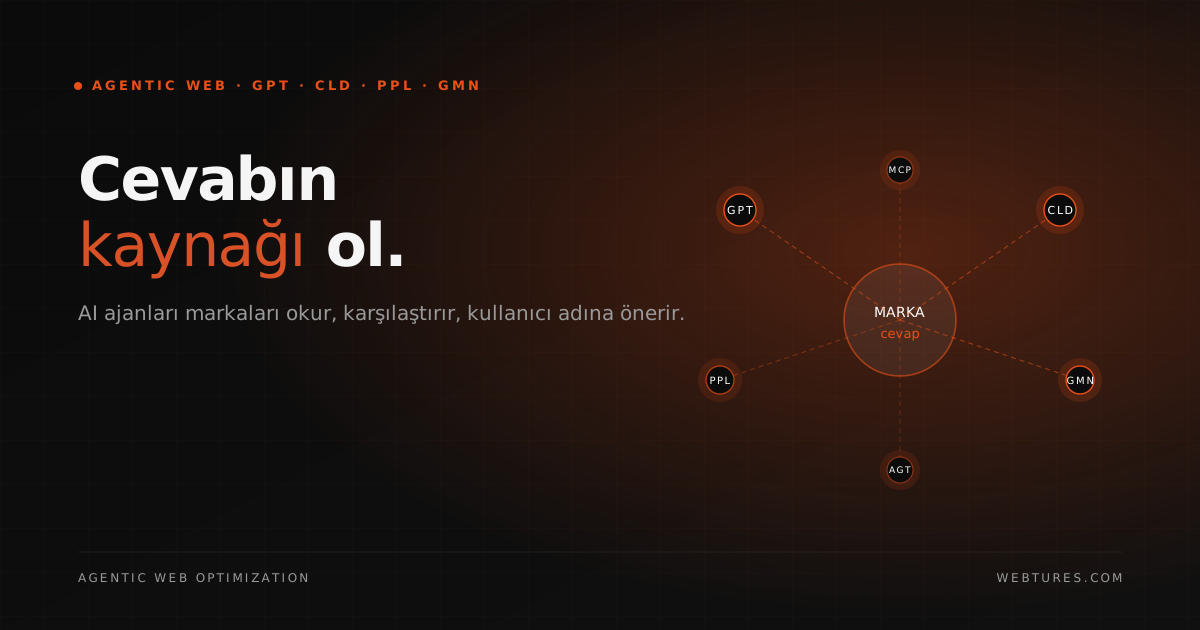
Unlike traditional bots, SI agents do not just crawl pages. They interpret content, extract data points, compare alternatives, and run decision logic on users' behalf. For an agent, a website is more than text blocks; it is structured knowledge, clear definitions, trust signals, and actionable data fields.
These systems analyze clarity, entity consistency, and data verifiability. If positioning is unclear, definitions are vague, or technical access is blocked, the site may be excluded from evaluation. Agent Experience Optimization minimizes these risks and enables SI systems to read and understand your site correctly.
Why Is Agent Experience Optimization Necessary?
Search optimization is still important for visibility, but inclusion in SI recommendation systems depends on different criteria. Agents evaluate trust, clarity, and actionability, not ranking alone. A site can be SEO-compliant yet still fail to appear in SI recommendation systems if its semantic and technical structure is weak.
In comparative decision environments, SI systems evaluate alternative brands simultaneously. Clear definitions, data-backed explanations, and a strong technical foundation stand out. Agent Experience Optimization increases a brand's chance of being chosen in this new competitive model.
Service Scope
What Does the Webtures AXO Service Include?
Webtures Agent Experience Optimization analyzes websites with an agent-first perspective. Information architecture, semantic structure, technical access layer, and data integration are evaluated together. For each area, current state is assessed, risk zones are identified, and an actionable roadmap is prepared.
Information Architecture & Semantics
Heading hierarchy, entity clarity, structured data, and content blocks are restructured so SI agents can interpret them correctly. Brand definitions and conceptual framing are clarified.
Technical Access Layer
Robots.txt, crawl permissions, server-side rendering, and dynamic content access are optimized for agent bots. Blocking configurations are detected and resolved.
Actionability & Data Integration
Form flows, checkout processes, and API layers are made automation-friendly. The data layer is structured to be machine-readable and operational.
Trust & Citability
Content's potential to be cited as a source, brand mention density, and reference signals are analyzed. The likelihood of SI systems choosing your brand as a trusted source is increased.
How Does the AXO Process Work?
This service is not a one-time technical check. It is designed as a strategic, measurable, and actionable transformation process. Webtures first analyzes the current experience, then runs agent interaction tests, identifies technical barriers, and produces a prioritized optimization roadmap.
Process
Process Steps
1. Current Experience Analysis
Site content, technical foundation, and data layer are examined from an agent-first perspective. Semantic structure, structured data, and accessibility status are mapped in detail.
2. Agent Interaction Testing
The site is tested against various SI agent scenarios. Which content is interpreted correctly, which areas are excluded, and where the risks lie are clearly documented.
3. Optimization Roadmap
For every identified risk area, concrete and actionable recommendations are prepared. Technical improvements, content edits, and strategic restructuring are presented as a prioritized roadmap.
Designing Experience in the Agentic Web Era
In the Agentic Web era, digital experience has two layers: human experience and agent experience. These layers must be designed together. Websites are no longer only platforms users visit; they are operational infrastructures that feed SI decision systems with data.
A future-ready digital architecture aims not only to be visible, but to be recommended, cited, and preferred. In the Agentic Web era, sustainable competitive advantage starts by optimizing experience for agents.
Honest scope
Who this is not for
AXO is for businesses whose product or service can actually be found and bought online. If you have no catalogue, sell entirely through a field team, or serve only the domestic market, part of what this measures currently returns nothing. And if your site carries no structured data yet, that layer has to come first.
Two audiences
The same page is read twice: the human layer and the machine layer
A corporate site has two audiences today. The human layer carries the experience a visitor feels; the machine layer carries the structure answer engines read. Agent Experience Optimization builds both in one production process, so the machine layer is never a patch added afterwards.
Human layer: experience and trust
Brand language, tone and visual identity; UX architecture and the decision journey; load speed and Core Web Vitals; accessibility and multiple languages. Everything the visitor sees and feels is built here.
Machine layer: structural signals
Semantic HTML and heading hierarchy; schema.org JSON-LD; entity clarity and knowledge graph consistency; answer-first content and llms.txt. This is the layer an answer engine reads.
Methodology
Our web methodology for SI visibility
It starts with measurement and ends with measurement, and in between brand and machine are designed at the same table. Where the site itself has to be rebuilt, these four steps run inside Agent Experience Optimization.
01 Discovery and baseline
We measure the brand's current SI visibility: share of model scanning in Brantial, competitor citation analysis and an entity audit. Without knowing where you start, no claim of improvement holds.
02 Authority architecture
Information architecture, page hierarchy and the content model are designed against how answer engines choose sources. The schema plan, entity map and llms.txt strategy are settled here.
03 Build
Design and development run together. The human layer and the machine layer merge in one production process rather than being split across teams.
04 Measure and hand over
After launch, visibility is measured again and a before-and-after citation report is produced. A clear handover path is left for continuous optimisation.
Scope
Delivery scope
Corporate web design and agent experience meet in one delivery. The items below are covered according to project scale, and each is tied to a measurable output.
Interface and experience
Wireframes, interface design, the decision journey, performance and accessibility. The whole human layer runs from one hand.
Structured data and access
Entity and schema architecture, crawler access policy, server-side rendering and actionable data fields.
Measurement and iteration
Share of model and citation measurement, agent task tests, monthly reporting and an improvement loop.
Let's find the right solution for your business
Tell us about your goals and we'll get back to you with a tailored growth plan.
Istanbul
London
New York
Shanghai
We get back to you as soon as possible.